
Month: March 2026
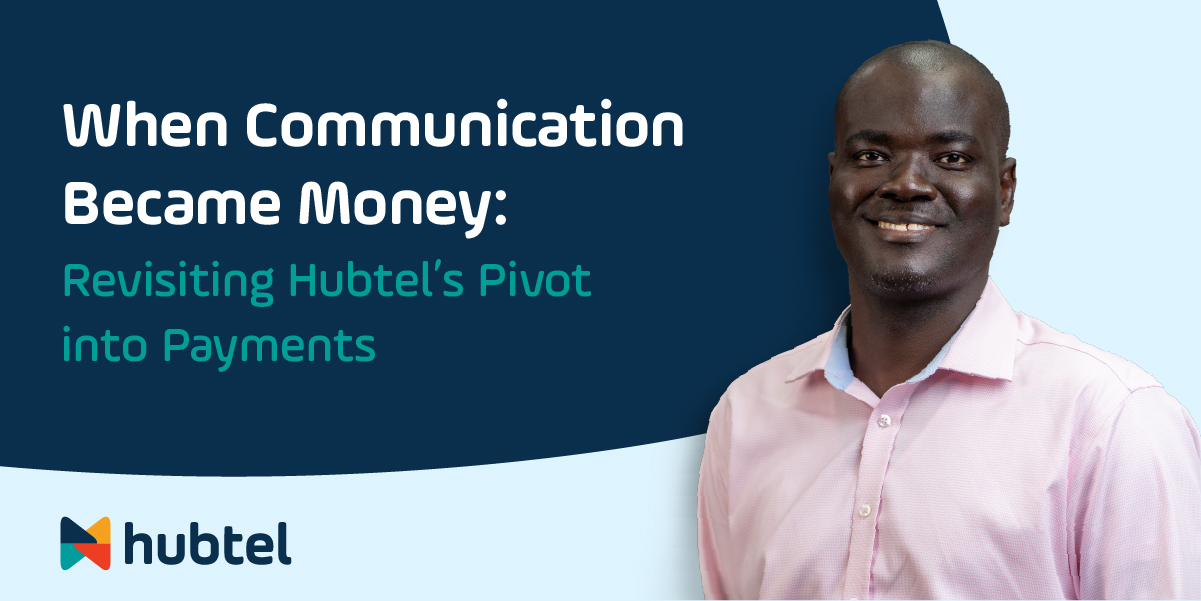
When Communication Became Money: Revisiting Hubtel’s Pivot into Payments
More than a decade ago, when Ghana’s financial ecosystem was still largely defined by physical bank branches, long queues, and cash transactions, Hubtel CEO Alex Bram articulated a vision that sounded bold back then but now reads like a roadmap to the future.
Speaking in 2014 about the role of communication technology in financial services, Bram argued that the future of money and payments would not be driven by traditional banking infrastructure but by the ability of businesses to communicate directly with people through mobile technology.
At the time, the idea challenged the dominant thinking within the financial industry that physical presence in communities, close to businesses, was the way to go. Yet today, Ghana’s thriving mobile money ecosystem and the rise of digital payment platforms have largely validated that prediction.
Communication as the New Financial Infrastructure
In an interview explaining the philosophy behind Hubtel’s early strategy, Bram emphasized that in Africa, the mobile phone had already become the most powerful tool of engagement between businesses and consumers.
“So, what we do is connect to mobile subscribers through mobile networks to enable businesses communicate or engage with their subscribers,” he said. “In our part of the world, mobile is the primary tool of communication. To reach everybody, you need to go through a mobile connection of some sort.”
That insight shaped Hubtel’s early focus on building digital platforms that allowed businesses to interact directly with mobile users, whether through messaging, notifications, payment prompts, or service platforms.
Rather than thinking about financial services purely as banking transactions, Bram saw them as communication-driven interactions between businesses and customers.
Rethinking Financial Access
Perhaps the most striking element of Bram’s prediction was his argument that financial access in Africa would no longer be determined by physical infrastructure such as bank branches.
“If you’re standing in a remote part of Africa and you need to receive money, it’s now more a function of who can communicate to you than who can put up the best branch in whichever remote part you find yourself,” he observed.
In essence, Bram foresaw that connectivity, rather than proximity and geography, would become the defining factor in financial inclusion.
That vision has played out dramatically across Ghana and Africa, where millions of people today access financial services through their phones without ever needing to enter a bank branch.
Payments as Communication
At the heart of Bram’s forecast was a simple but transformative idea: payments would evolve from banking processes into communication processes.
“The future of payments is more communication than banking,” he predicted. “The function of moving money from one side to the other is going to be taken over by communication companies.”
Back then, such a statement may have seemed provocative, especially to traditional financial institutions. But the rapid growth of mobile money platforms, digital wallets, merchant payment systems, and mobile-enabled commerce has shown how deeply communication networks now underpin financial transactions.
Today, businesses across Ghana—from small retailers to major service providers—rely on mobile messaging, payment links, QR codes, and integrated apps to receive payments and interact with customers.
READ ALSO: Alex Bram on Asempa FM: The Hubtel Journey, Lessons, and the Power of Being Useful Everyday
A Call for Partnership, Not Competition
Importantly, Bram’s message in 2014 was not framed as a threat to banks but as an invitation for collaboration.
He encouraged financial institutions to rethink their approach to emerging technology companies and mobile platforms, urging them to see innovation as an opportunity rather than a disruption.
“It was more a call to banks to begin changing their mindset and begin partnering instead of seeing mobile money and the new communication platforms, such as our own mpower as competition,” he explained.
Using a memorable metaphor, Bram captured how technology companies viewed their role in the evolving ecosystem.
“No, we are not the guys who are about to spoil the party,” he said. “We are the guys who are about to light up the party.”
A Vision That Became Reality
Looking back today, Bram’s words read less like speculation and more like an early blueprint for the modern fintech landscape in Ghana.
Digital communication channels now sit at the heart of financial transactions, from paying utility bills and buying airtime to receiving salaries and running online businesses. Platforms that enable businesses to engage customers through mobile technology have become central to the digital economy.
Hubtel itself has grown into one of Ghana’s most prominent fintech platforms, helping businesses accept payments, connect with customers, and manage transactions through mobile and online channels.
What was once a bold idea, that communication networks could reshape how money moves has become an everyday reality.
And as Ghana continues its transition toward a fully digital economy, the insight that “the future of payments is communication” remains as relevant today as it was when Alex Bram first said it more than ten years ago.









Related
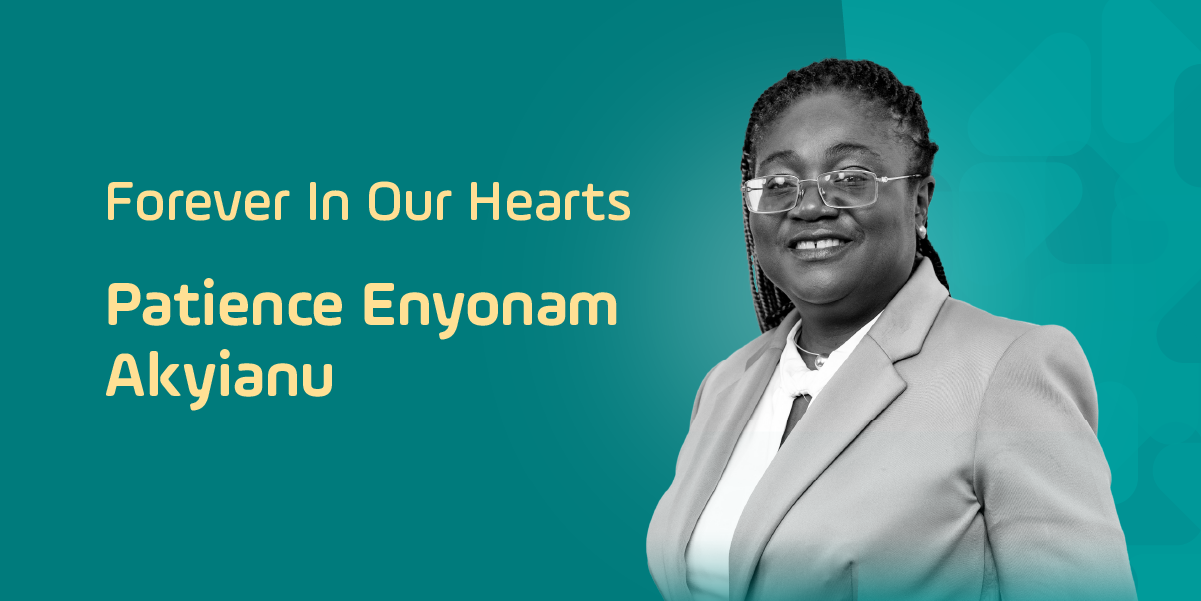
Honouring The Life and Service of Patience Enyonam Akyianu, Hubtel Board Chair
September 25, 2026| 3-minute read
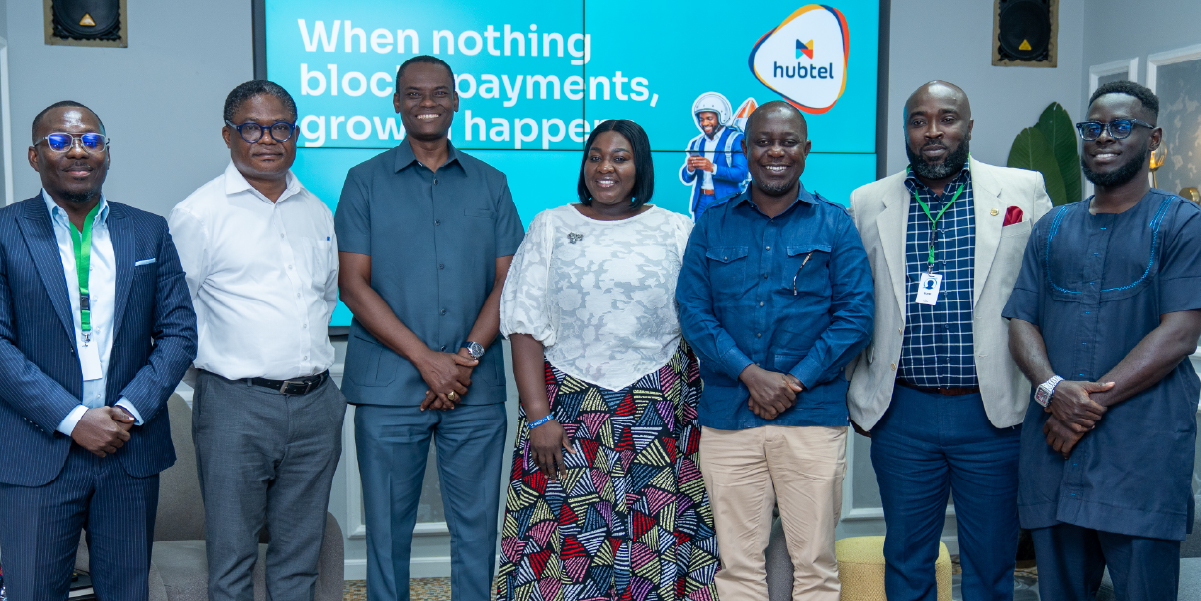
Hubtel and B&FT Discuss New Opportunities for Business Growth
September 18, 2026| 3-minute read
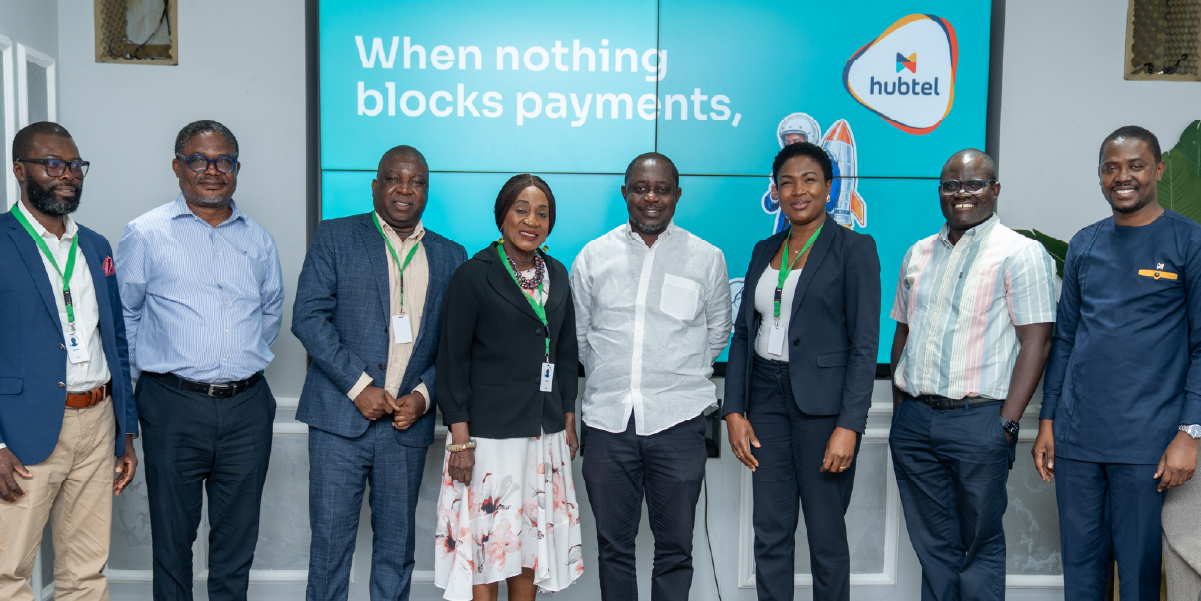
Hubtel and Nova Business School Africa Discuss Partnership on Digital Entrepreneurship
September 14, 2026| 5-minute read
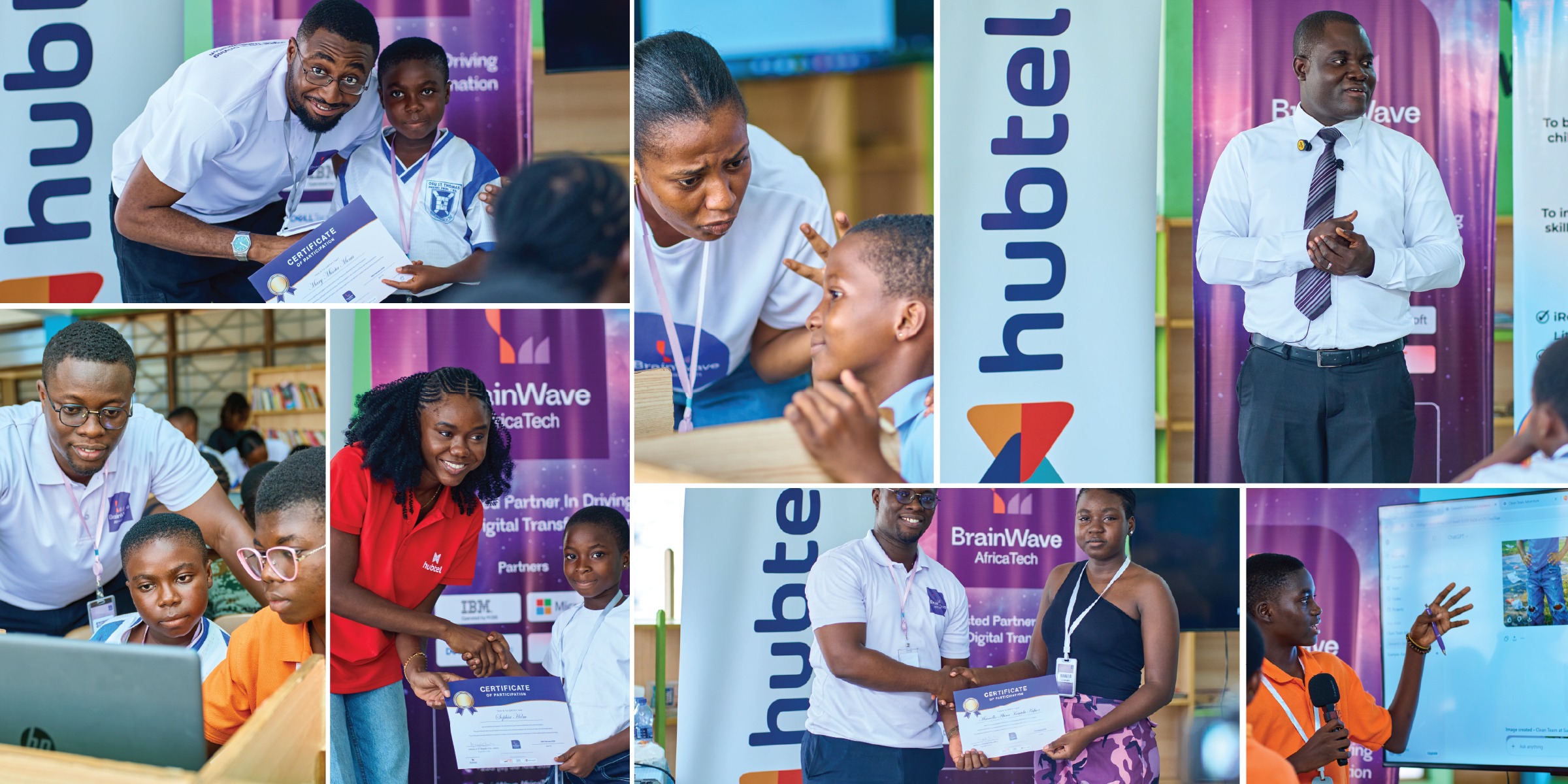
Hubtel Empowers Next Generation Through AI Education Partnership with Brainwave AfricaTech
Hubtel has strengthened its commitment to youth empowerment and digital inclusion by sponsoring an Artificial Intelligence (AI) training programme organised by Brainwave AfricaTech. The Brainwave AfricaTech – AI Explorer’s Club is aimed at equipping young learners, many from under-resourced communities, with practical and future-ready technology skills.
The programme, delivered through Brainwave’s AI Explorers Club, introduced pupils to the fundamentals of artificial intelligence, ethical AI use, prompt writing, image and video generation and real-life applications of AI in education and creativity.
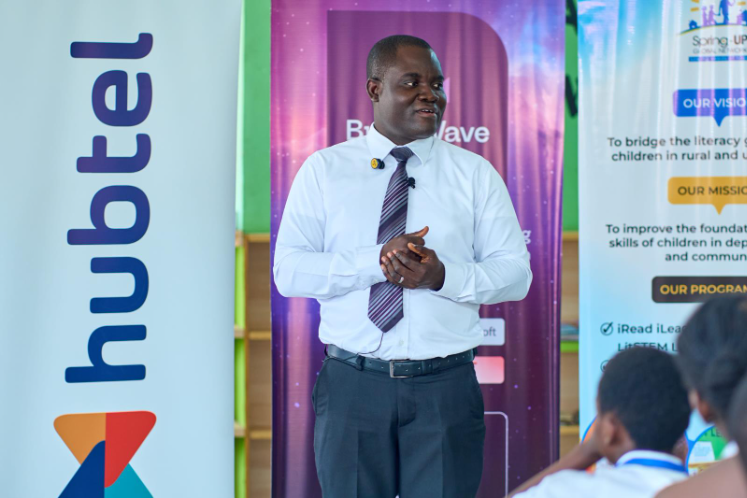
Speaking at the event, Augustine Gyawu Adjei, Head of Engineering at Hubtel, said the company’s involvement was driven by a shared vision to prepare young people early for the digital future.
“When I first looked at the mission and vision of this programme, it went in line with what Hubtel wants to do,” he said. “It is a great initiative to help young children, especially those in underdeveloped areas, understand where the technology journey is going.”
According to him, early exposure is no longer optional.
“We need to start now. We can’t wait. Our children need to learn how to learn, how to make quick decisions, how to be confident, and how to distinguish between good technology and unneeded technology,” he added.
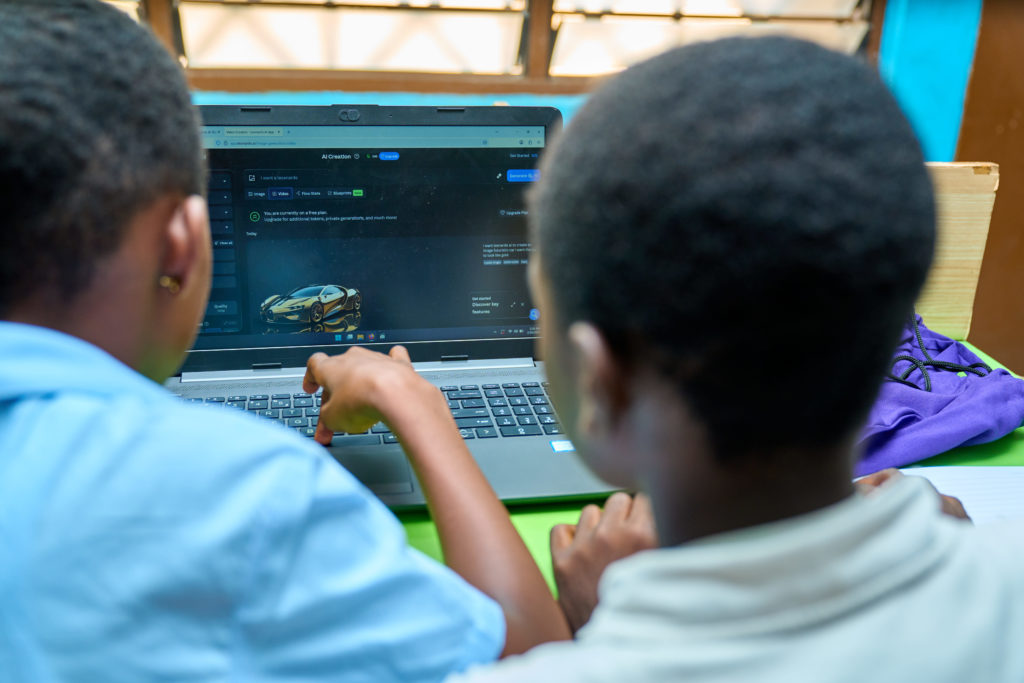
One of the programme’s beneficiaries, Annan Crystal, a pupil of Osu Manhean Basic School, shared her excitement after using AI tools for the first time.
During a practical session, the pupil demonstrated how she used Leonardo AI, an image-generation platform, to create futuristic designs.
“We are using an AI application called Leonardo AI to generate images,” she explained. “I gave a prompt for a futuristic car to look like gold, and it created a golden futuristic car. This is what I’m practising to present to an audience.”
For her, the experience was eye-opening.
“I’m enjoying it because you don’t usually get an opportunity to use AI like this. This is my first time seeing that AI can do all these things,” she said.
Beyond creativity, she has already begun to understand AI’s economic potential.
“I will tell my friends that AI can create images and also help us make money. You can generate works using AI and earn from it,” she added.
Innovation and Product Development Lead at Brainwave, Caleb Jimoh, explained that the programme is structured to move learners from curiosity to capability. Participants begin with the AI Explorers Club, advance to the Builders Club for hands-on projects, and later transition into the Innovators phase, where they develop more complex solutions with real-world relevance.
He noted that the goal is not just to teach children how to use AI tools, but to encourage them to become creators and problem-solvers.
“We want the next generation to think beyond how AI can serve them and begin to integrate AI into how they build solutions and empower their communities.”
Despite initial misconceptions about AI, facilitators observed growing confidence and enthusiasm among participants as the weeks progressed.
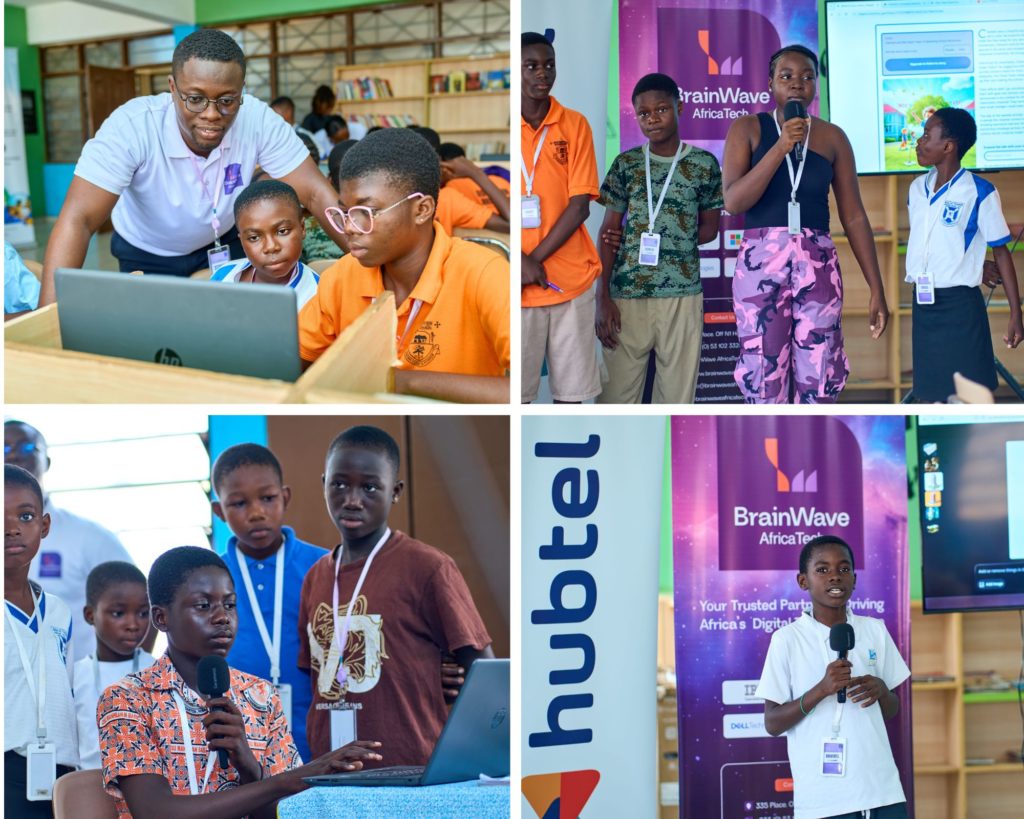
Academy Manager at Brainwave and a facilitator of the programme, Elizabeth Addai, highlighted the importance of Hubtel’s sponsorship in making the training accessible.
“Some of these kids had never used a computer before. Some schools don’t even have ICT labs,” she said. “Without Hubtel’s support, many of these children would never have had access to opportunities like this.”
Over the four-week programme, children developed digital literacy skills, learned responsible AI use, and gained confidence in using computers and emerging technologies.
“They now speak confidently about AI and are excited to go back to school to teach their friends and even their teachers,” she added.
Hubtel has indicated its readiness to continue investing in initiatives that build confidence, creativity, and problem-solving skills among Ghana’s youth.
READ ALSO: Hubtel Opens Ghana’s First Indigenous AI Lab
“As far as our mission carries us, we will support anything that helps the rising generation become confident problem-solvers,” Augustine said.
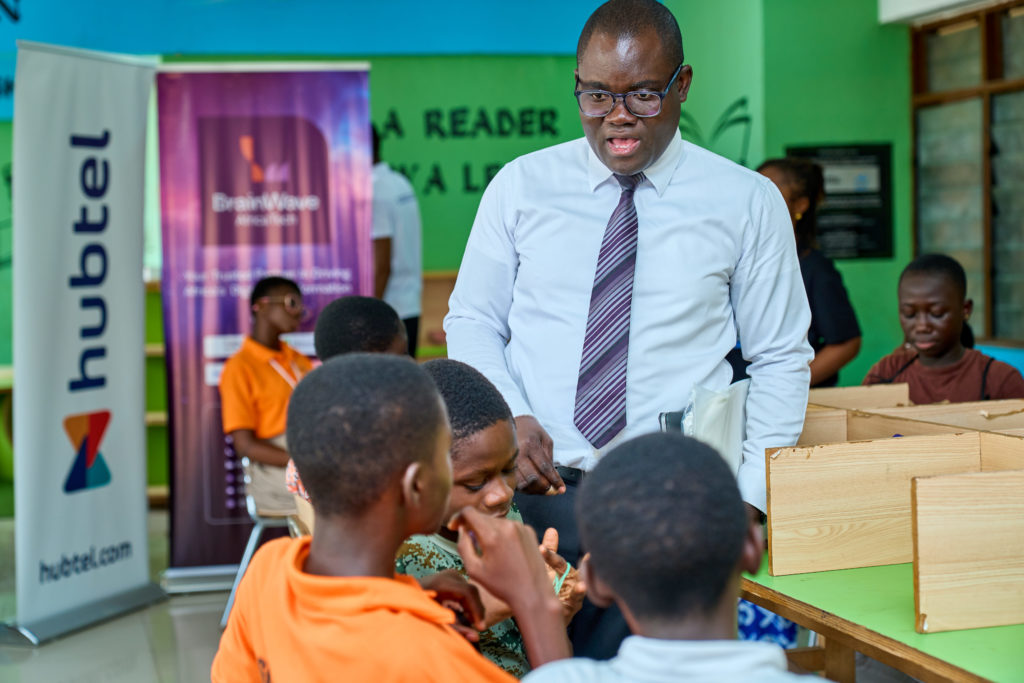
As artificial intelligence becomes increasingly central to education, work, and innovation, the Hubtel-Brainwave partnership stands as a strong example of how private-sector leadership can create meaningful, measurable impact, one child, one idea, and one opportunity at a time.
About Hubtel
Hubtel is a Ghanaian technology company licensed by the Bank of Ghana as an Enhanced Payment Service Provider. The company enables businesses to accept payments, including mobile money, cards, and QR, manage transactions, and connect with customers through messaging and commerce.
Individuals also use the Hubtel App to pay bills, send money, and access essential services. Founded in 2005, Hubtel operates 12 offices nationwide and employs over 600 people across Ghana.
In 2024, Hubtel launched Ghana’s first indigenous AI Lab, a dedicated research and development unit applying artificial intelligence and machine learning to enhance fraud detection, strengthen user engagement, and improve credit assessment systems.
Warning: Constant COLOR_SCHEME_BLUE already defined in /var/www/html/bloghubtel/wp-content/themes/bloghubtel/template-parts/content-mobile-app-banner.php on line 3
Warning: Constant COLOR_SCHEME_RED already defined in /var/www/html/bloghubtel/wp-content/themes/bloghubtel/template-parts/content-mobile-app-banner.php on line 4
Warning: Constant COLOR_SCHEME_LIGHT already defined in /var/www/html/bloghubtel/wp-content/themes/bloghubtel/template-parts/content-mobile-app-banner.php on line 5
Warning: Constant FACEBOOK_SHARE_URL already defined in /var/www/html/bloghubtel/wp-content/themes/bloghubtel/template-parts/content-mobile-app-banner.php on line 8
Warning: Constant LINKEDIN_SHARE_URL already defined in /var/www/html/bloghubtel/wp-content/themes/bloghubtel/template-parts/content-mobile-app-banner.php on line 9
Warning: Constant TWITTER_SHARE_URL already defined in /var/www/html/bloghubtel/wp-content/themes/bloghubtel/template-parts/content-mobile-app-banner.php on line 10
Warning: Constant WHATSAPP_SHARE_URL already defined in /var/www/html/bloghubtel/wp-content/themes/bloghubtel/template-parts/content-mobile-app-banner.php on line 11
Warning: Constant CUSTOM_ADS_CONTENT_WRAPPER already defined in /var/www/html/bloghubtel/wp-content/themes/bloghubtel/template-parts/content-mobile-app-banner.php on line 14
Warning: Constant IMAGE_WRAPPER_CLASSES already defined in /var/www/html/bloghubtel/wp-content/themes/bloghubtel/template-parts/content-mobile-app-banner.php on line 15
Warning: Constant APPLE_APP_STORE_URL already defined in /var/www/html/bloghubtel/wp-content/themes/bloghubtel/template-parts/content-mobile-app-banner.php on line 18
Warning: Constant GOOGLE_PLAY_STORE_URL already defined in /var/www/html/bloghubtel/wp-content/themes/bloghubtel/template-parts/content-mobile-app-banner.php on line 19
Warning: Constant HUAWEI_APP_GALLERY_URL already defined in /var/www/html/bloghubtel/wp-content/themes/bloghubtel/template-parts/content-mobile-app-banner.php on line 20
Related
Honouring The Life and Service of Patience Enyonam Akyianu, Hubtel Board Chair
September 25, 2026| 3-minute read
Hubtel and B&FT Discuss New Opportunities for Business Growth
September 18, 2026| 3-minute read
Hubtel and Nova Business School Africa Discuss Partnership on Digital Entrepreneurship
September 14, 2026| 5-minute read