
Tag: Feature Story

Hubtel CEO Alex Bram declares the missing ingredient in Ghana’s debit economy found, as Albrim launches Pay Small Small
Albrim Microfinance launched Pay Small Small at the Kempinski Hotel in Accra on 12 November. Hubtel is the product’s platform partner and myCredit Score its credit scoring partner. Partners, merchants, guests from several companies and officials from the Bank of Ghana attended the launch dinner.
Albrim COO Mr Abdul Aziz Daudi described a product that brings technology, payments, merchants and structured credit together. A customer accesses the platform digitally, selects an eligible product or service, completes the required process and pays under the applicable payment arrangements.
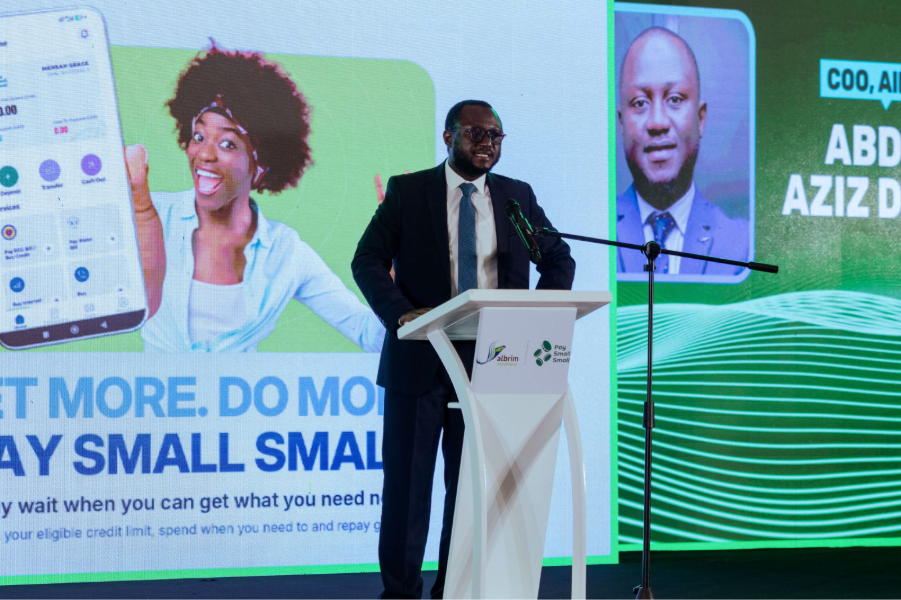
What Pay Small Small does
Most everyday spending in Ghana happens in small amounts, and most of it is paid for with money already in hand. When that money runs short, so does access to the things a household depends on: power for the home, fuel to get to work, food and supplies for the week.
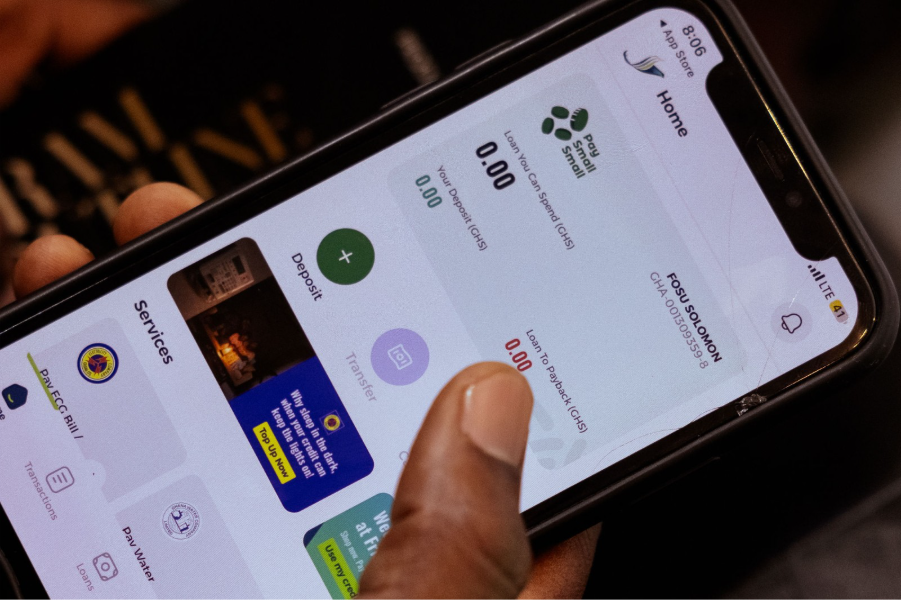
Pay Small Small is designed for that moment. It enables customers to get what they need when they need it, then spread the cost into small repayments that follow the way they actually earn: day by day, rather than in one large sum at the end of the month. Albrim’s promise for the product is simple: “Pay small, live big.”
READ ALSO: Pay Small Small on Hubtel
Think of a trader whose prepaid meter runs low in the middle of the week, or a commercial driver who needs to fill up before the first trip of the day. For people like them, Pay Small Small can mean the difference between a lost day and a working one.
A debit economy with a gap in it
Hubtel CEO Mr Alex Bram, in his keynote speech described the problem the product was built to fix. Ghana’s everyday economy, he said, is made of small transactions, and it runs almost entirely on debit-only transactions. “When the cash finishes, when the balance hits zero, the transactions stop,” he said. The wallet owner cannot buy. “The home goes dark. The opportunity passes.”
“Not because our people are unwilling to work,” Mr Bram said. “Because the system gives their work no pre-approved credit at all.” The missing ingredient, he said, is responsible credit, and the tools to provide it now exist. The Ghana Card gives every citizen a trusted identity, and Mobile Money and instant payments reach every corner of the country. “And every transaction we make leaves an honest record of how we earn, how we spend, and how we pay,” he said. “Technology can now see what no loan officer could ever see.”
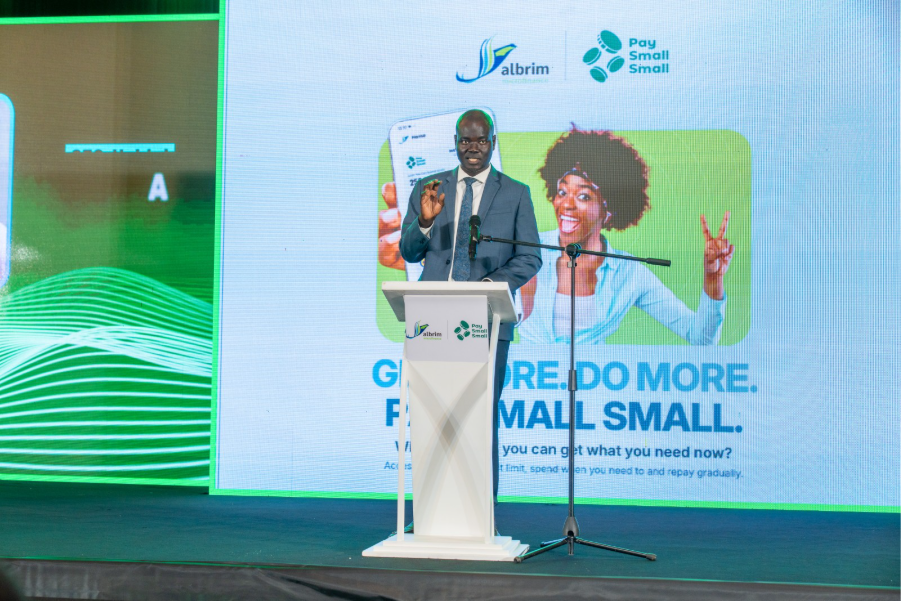
The result is what he called transactional credit. “No application. No queue. No waiting for a decision.” “The credit is already there, inside the transaction, at the exact moment you need it,” he said, because “your everyday record has already spoken for you.”
Built slowly, on purpose
“Credit done carelessly does not lift people. It buries them,” Mr Bram said. “So when Hubtel and Albrim began this work in the middle of 2023, we made one rule. We would do it responsibly, even if it meant doing it slowly.”

The team built the product, tested it with a cohort of real borrowers, studied what happened, and built it again. They did that four times, with four iterations and four cohorts of borrowers. “Each cohort taught us something no boardroom could,” he said, including what people can truly afford and when they can truly pay. The biggest lesson was the simplest one. “Life in Ghana does not move in neat monthly instalments. It moves day by day. Small small.” So the credit was shaped to move the same way. “Small amounts. Small paybacks. A product that bends to fit real life, instead of asking real life to bend.”
Across the four pilot cohorts, Mr Bram said, the team has had over 72,000 customers already using the product, and more than GHS 35 million in credit has already been extended. In the latest cohorts, over 94% of customers repaid on schedule and over 72% came back for a second transactional credit. He said the numbers prove that ordinary Ghanaians, in the formal sector, the informal sector or a bit of both, “were all trusted with credit, many for the first time, and they proved that trust right.”
The partners behind the product
Pay Small Small is Albrim’s product. Board chairman Mr Albert Asare gave the evening’s first recognition to Hubtel, the partner that “stood at the heart of the technology journey.” He called Hubtel “an important partner, bringing our digital proposition to life” and celebrated it “not simply as a service provider, but as a partner in innovation.”
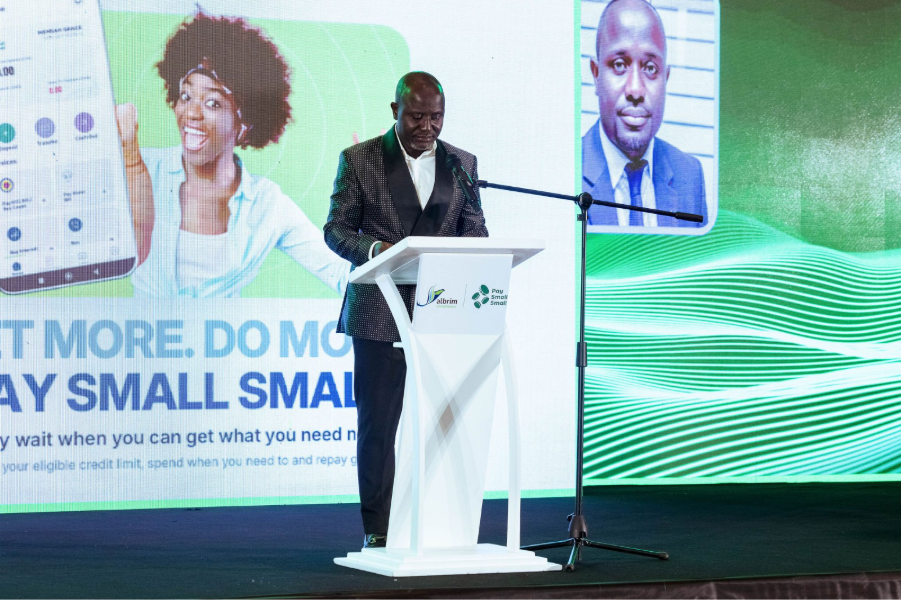
myCredit Score came next. “Responsible digital credit requires more than technology. It requires intelligence. It requires data,” Mr. Asare said. He described myCredit Score’s role as “critical to helping us strengthen the intelligence behind our credit journey and support more informed credit decisions.” myCredit Score, one of Ghana’s three credit bureaus, scores customers at the point of credit. Repayment is reported back to the bureau and collated in its system.
Mr. Louis Gyimah, General Manager of myCredit Score, told guests that “your repayment behavior feeds into our credit model,” and that every customer who pays on time builds the record behind better opportunities. His advice to customers was short. “Pay on time. Your good habit is your credit history. Your credit history is your passport to more.”
The first merchants brought the product into everyday life. ECG was the first venture, and Mr Asare said it showed the idea behind the product. “Access what you need today and pay progressively.” Star Oil was the first fuel station and Friendly Mall the first retail shop. Mr Asare said the three share one thing. “They were at the beginning.”
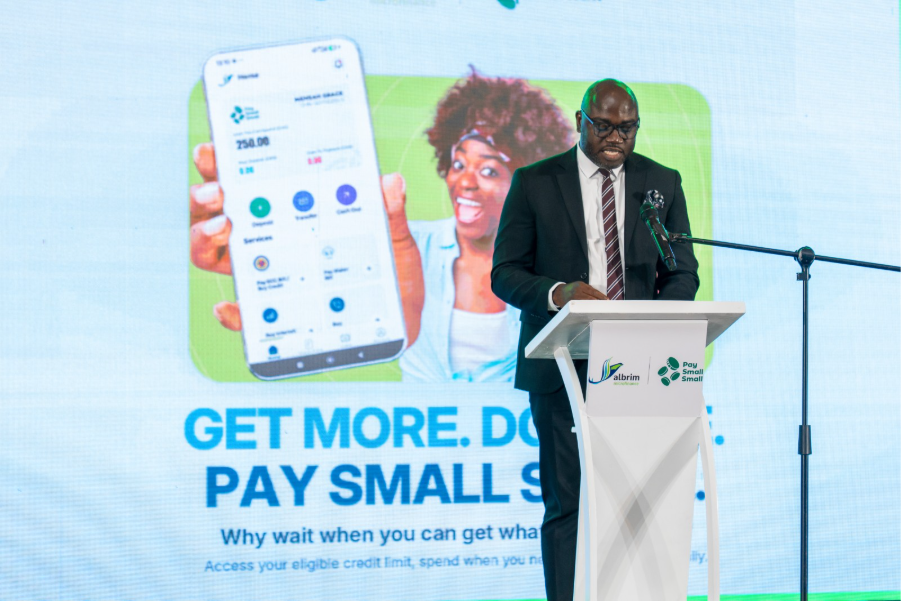
Mr Bram’s own thanks were specific. He credited the Bank of Ghana for its “blessings and approval” and recalled that when he first met the Governor in person, “his eyes lit up when the subject of digital transactional credit came up.” He said myCredit Score “gave us unrestricted support,” opened its platform to the team and “let us run experiment after experiment.” “Much of what we learned, we learned there,” he said.
He praised ECG for saying yes “to something that had never been done before,” and told Albrim, “This launch is yours.” To the Hubtel product teams, who rebuilt the product four times, he said “Hubtel is very proud of you.”
The missing ingredient
Mr Bram said tonight is bigger than one product. Albrim Microfinance, working with Hubtel, can make a “bold declaration” that the missing ingredient for micro-transactions in Ghana “has been found, it has been proven, and it works.”

In his closing, he gave the room a charge. “When you leave this room, tell somebody,” he said, because there is now “a credit that lives with them, works with them, and asks for nothing but their Ghana Card.” “Tell them Pay Small Small is finally here.”




Related

Star Assurance HR team visits Hubtel to learn how people grow in a hybrid workplace
November 18, 2026| 4-minute read
Hubtel Mentors Young Fintech Innovators at MoMo Fintech Lab Accra
November 12, 2026| 5-minute read

Accra hosts AfIGF 2026 as African leaders push for digital sovereignty, child online safety and job-ready skills
November 12, 2026| 5-minute read
Star Assurance HR team visits Hubtel to learn how people grow in a hybrid workplace
The Human Resources team of Star Assurance, together with Chief Financial Officer Justice Offei, visited Hubtel on 12 November 2026 on a learning expedition. The visit is part of a wider review of how Star Assurance onboards, trains and engages its own staff. The team came to see how Hubtel approaches the same task through Hubtel Academy, its in-house platform for onboarding, learning, staff surveys and reporting.
It was not a traditional HR system demonstration. It was an exchange between two HR teams on a question both take seriously, which is how to help people grow in their jobs and not simply keep records of them. The focus was the employee lifecycle and the Academy ecosystem around it, and how Hubtel develops employee capability, productivity, awareness and internal engagement.

Service starts with people
Service quality depends heavily on the people who deliver it. Star Assurance’s HR team wanted to see how another Ghanaian company keeps learning consistent for every employee, whether new or long-serving, in the office or working remotely.

One lifecycle, one platform
The Hubtel Academy team walked the guests through the full employee lifecycle. New colleagues follow a structured learning path in their first weeks. Courses, assessments, surveys and reporting sit on a single learning management system (LMS), so staff in the office and staff working remotely get the same experience.
Learning content is produced in-house, and Hubtel’s own people facilitate the training. A hybrid classroom with livestreaming brings in-person and online participants into the same session.

“Today it is the one place where our people learn, stay informed and are supported.”
Amanda Ofori-Addo, Team Supervisor and Content Writer, Hubtel Academy
Three questions that shaped the session
Much of the session was given over to questions from the guests, and they centred on three areas.
The classroom. Star Assurance asked who designs and delivers the training, and how an employee joining online gets the same session as one in the room. The Academy team explained that content is built in-house and facilitated by Hubtel’s own staff, which keeps it close to the work, and showed how livestreaming runs single sessions for mixed audiences.
Staff surveys. The guests wanted to know how Hubtel gets honest feedback from employees and what happens to the results. The Academy team described how surveys sit alongside quizzes and assessments on the same platform, and how reporting gives leaders a clear view of participation and progress so feedback can be acted on.
Work culture. Star Assurance asked how a company keeps people connected and committed when they are not always in the same place. That question led into the part of the session that goes beyond formal learning.

Beyond the classroom
When people are not always in the same place, connection has to be planned. The Academy team pointed to collaboration activities, staff events and Academy-supported programmes, which keep colleagues engaged across teams and locations and feed back into how people work together.
Learning that ran both ways
The exchange was not one-sided. The guests’ questions gave the Hubtel team a fresh view of its own approach.

“Hosting Star Assurance was a chance to share how we onboard, train and engage our people. Their questions on our classroom, surveys and work culture reminded us that learning only works when it is built around people.”
Amanda Ofori-Addo, Team Supervisor and Content Writer, Hubtel Academy

Growth is a shared question
The question that opened the visit, how to help people grow and not simply keep records of them, does not belong to one company. Star Assurance came to put it to a team that works on it every day, and Hubtel was glad to answer it and to be asked in return. Good practice improves when teams compare notes, and this expedition was a step in that direction.
Warning: Constant COLOR_SCHEME_BLUE already defined in /var/www/html/bloghubtel/wp-content/themes/bloghubtel/template-parts/content-mobile-app-banner.php on line 3
Warning: Constant COLOR_SCHEME_RED already defined in /var/www/html/bloghubtel/wp-content/themes/bloghubtel/template-parts/content-mobile-app-banner.php on line 4
Warning: Constant COLOR_SCHEME_LIGHT already defined in /var/www/html/bloghubtel/wp-content/themes/bloghubtel/template-parts/content-mobile-app-banner.php on line 5
Warning: Constant FACEBOOK_SHARE_URL already defined in /var/www/html/bloghubtel/wp-content/themes/bloghubtel/template-parts/content-mobile-app-banner.php on line 8
Warning: Constant LINKEDIN_SHARE_URL already defined in /var/www/html/bloghubtel/wp-content/themes/bloghubtel/template-parts/content-mobile-app-banner.php on line 9
Warning: Constant TWITTER_SHARE_URL already defined in /var/www/html/bloghubtel/wp-content/themes/bloghubtel/template-parts/content-mobile-app-banner.php on line 10
Warning: Constant WHATSAPP_SHARE_URL already defined in /var/www/html/bloghubtel/wp-content/themes/bloghubtel/template-parts/content-mobile-app-banner.php on line 11
Warning: Constant CUSTOM_ADS_CONTENT_WRAPPER already defined in /var/www/html/bloghubtel/wp-content/themes/bloghubtel/template-parts/content-mobile-app-banner.php on line 14
Warning: Constant IMAGE_WRAPPER_CLASSES already defined in /var/www/html/bloghubtel/wp-content/themes/bloghubtel/template-parts/content-mobile-app-banner.php on line 15
Warning: Constant APPLE_APP_STORE_URL already defined in /var/www/html/bloghubtel/wp-content/themes/bloghubtel/template-parts/content-mobile-app-banner.php on line 18
Warning: Constant GOOGLE_PLAY_STORE_URL already defined in /var/www/html/bloghubtel/wp-content/themes/bloghubtel/template-parts/content-mobile-app-banner.php on line 19
Warning: Constant HUAWEI_APP_GALLERY_URL already defined in /var/www/html/bloghubtel/wp-content/themes/bloghubtel/template-parts/content-mobile-app-banner.php on line 20
Related
Hubtel CEO Alex Bram declares the missing ingredient in Ghana’s debit economy found, as Albrim launches Pay Small Small
November 18, 2026| 6-minute read
Hubtel Mentors Young Fintech Innovators at MoMo Fintech Lab Accra
November 12, 2026| 5-minute read
Accra hosts AfIGF 2026 as African leaders push for digital sovereignty, child online safety and job-ready skills
November 12, 2026| 5-minute read
Hubtel Mentors Young Fintech Innovators at MoMo Fintech Lab Accra
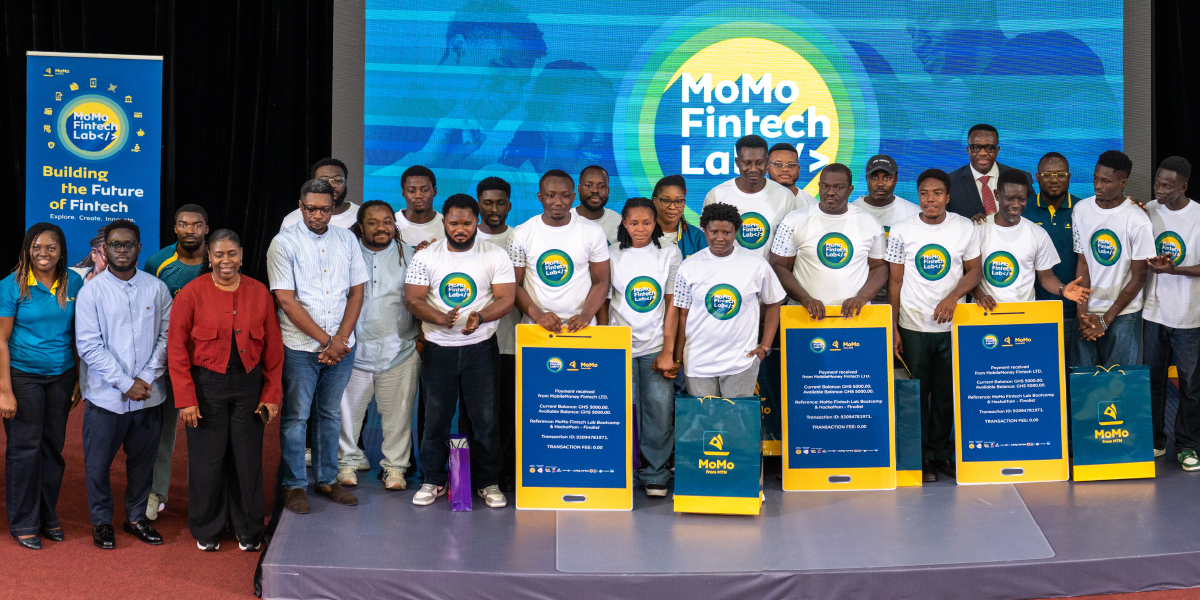
Hubtel’s UX, Engineering and Product teams mentored young developers and innovators at the Accra bootcamp of the maiden MoMo Fintech Lab, helping 19 fintech ideas take shape. Ten made it to the zonal pitch final on Friday, 6 November, and five teams have advanced to the National Mentorship Programme.
The MoMo Fintech Lab is organised by MobileMoney Fintech LTD (MMFL). It brings together emerging Ghanaian developers to build technology solutions for real challenges in mobile money, payments and financial services. Alongside Hubtel’s sessions, the programme covered legal and regulatory guidance, field research, prototype testing, mentorship and business development.
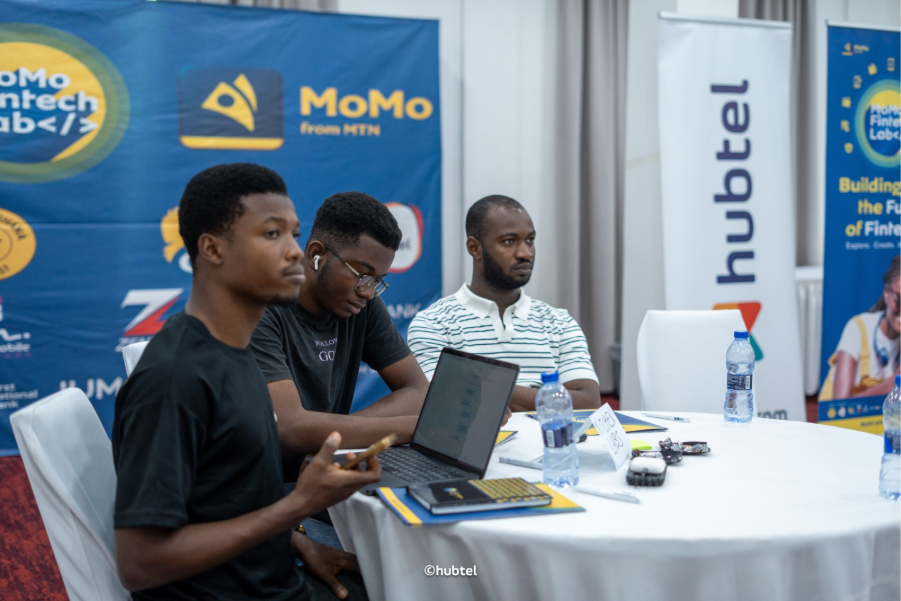
Hubtel took part as official technology partner, bringing specialists from three departments to work directly with participants during the bootcamp, held from 2 to 6 November.
READ ALSO: Hubtel Joins MTN to Combat Fraud Via Fintech Partner Exchange
Design Thinking and Prototyping with Hubtel’s UX Team
The bootcamp opened with participants pitching their ideas and exploring opportunities in Ghana’s mobile money and fintech space.
Hubtel’s UX team then led a design thinking session that moved the focus from the ideas to the people who would use them. Participants learned how to identify user needs, decide which features matter most, and design products that are easy to use and genuinely useful.
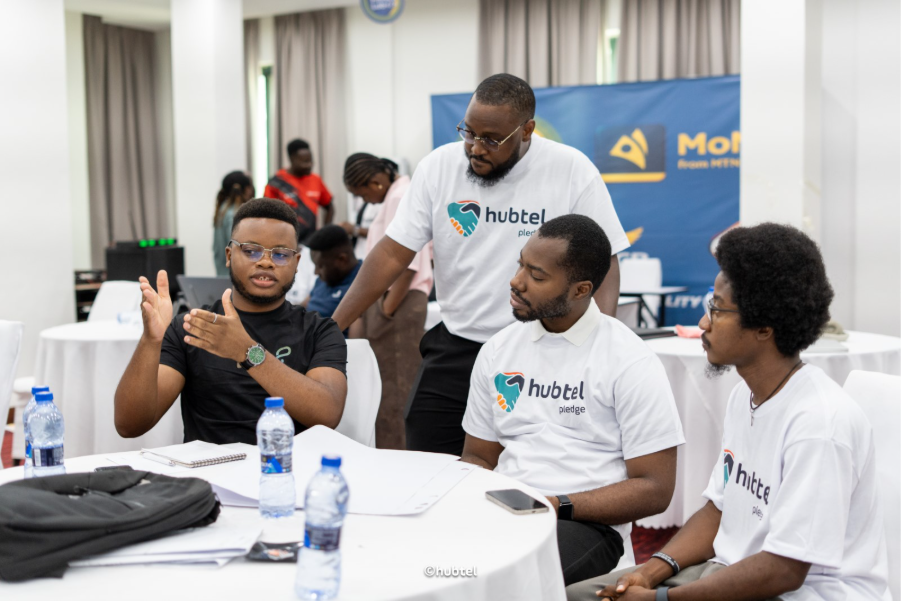
The team also introduced prototyping, helping each team build an early version of its application to test, review and improve before full development. The UX team stayed on to help participants refine those prototypes.
Hubtel’s API for Ghanaian Developers
As the products took shape, Hubtel’s Engineering team, led by Head of Department Augustine Adjei, introduced participants to Hubtel’s newly developed API.
The session showed how the API works, how developers can integrate it into consumer applications, and the wider set of tools Hubtel offers developers building digital solutions in Ghana.
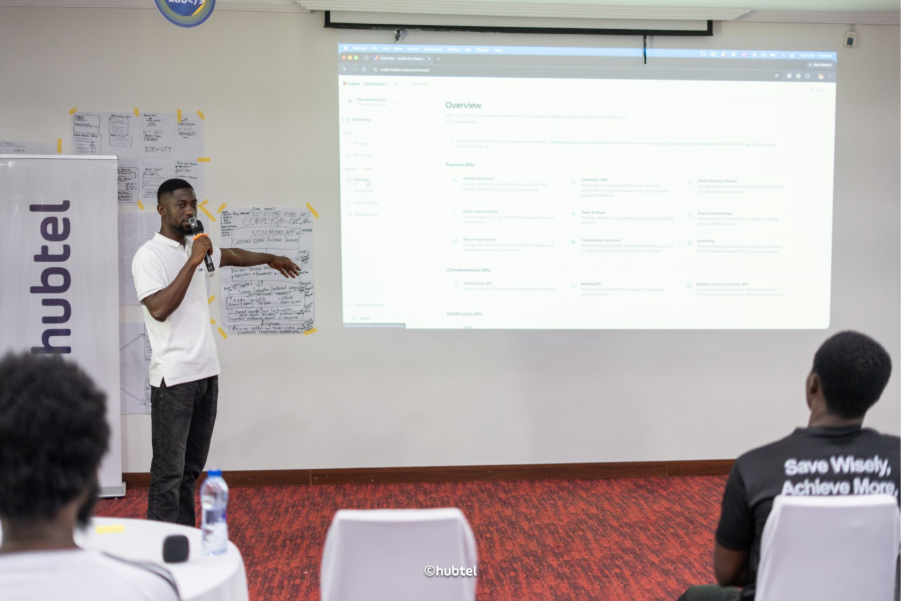
“We can see how hungry these bright minds are to build our country and brighten the corners they are in using technology,” Adjei said.
Market Research and Validation with Hubtel’s Product Team
Hubtel’s Product team took participants through market research and validation. Teams tested the problems their ideas were meant to solve, examined what potential users actually needed, and assessed whether a real market existed for their solutions.

Ten Teams Pitch, Five Advance to the National Stage
Of the 19 ideas presented at the start of the bootcamp, 10 reached the zonal pitch competition at the Ghana College of Physicians and Surgeons on Friday, 6 November.
Teams presented to a panel of industry experts, with solutions covering security, savings, payments and digital payment services for small and medium-sized enterprises (SMEs).
The judging panel included Hubtel’s Head of Brand and User Experience, Nana Owusu Marfo, alongside representatives from the Bank of Ghana, MMFL and appsNmobile. Five teams were selected for the National Mentorship Programme.
In her keynote, MMFL’s Chief Products and Services Officer, Sylvia Otuo-Acheampong, urged participants to put customers at the centre of product development.
“When you are pitching your ideas, I know this morning you want to impress the judges, but it is about the customer,” she said.
“Innovation is something every organisation needs. For me, as Chief Products and Services Officer, the question is always: How do we make life easier for our customers? How do we remove friction?”
MMFL Chief Executive Officer Shaibu Haruna said the zonal bootcamps had produced promising ideas across agricultural support, security for traders and merchant solutions.
“Our focus is to help these innovators strengthen their solutions, build commercially viable business models and prepare for the next stage of the programme,” he said.
The Hubtel Pledge: Building Ghana’s Innovation Pipeline
Hubtel’s support for the MoMo Fintech Lab is part of the Hubtel Pledge, its commitment to give 1% of profit, 1% of employee time and 1% of products to causes that improve lives. Since joining the global Pledge 1% movement in 2017, Hubtel has backed initiatives in education, technology and community development.
At the closing ceremony, Owusu Marfo encouraged participants to take their ideas beyond the hackathon.
“Innovation should go beyond having great ideas. It’s about building solutions that make life better for people,” he said.
He urged participants to keep learning and building solutions that respond to real needs, adding that the next big idea to transform how people live, work or do business could come from any one of them.
What’s Next: National Demo Day on December 3
The MoMo Fintech Lab now moves to the National Mentorship Programme, which brings together selected teams from the Accra, Northern and Middle zones for further technical and business guidance.
The programme ends with a National Demo Day on 3 December 2026 at the University of Professional Studies, Accra (UPSA) Auditorium. Six finalists drawn from all three zones will compete for cash awards of up to GH₵100,000, digital devices and other support to grow their businesses.
Warning: Constant COLOR_SCHEME_BLUE already defined in /var/www/html/bloghubtel/wp-content/themes/bloghubtel/template-parts/content-mobile-app-banner.php on line 3
Warning: Constant COLOR_SCHEME_RED already defined in /var/www/html/bloghubtel/wp-content/themes/bloghubtel/template-parts/content-mobile-app-banner.php on line 4
Warning: Constant COLOR_SCHEME_LIGHT already defined in /var/www/html/bloghubtel/wp-content/themes/bloghubtel/template-parts/content-mobile-app-banner.php on line 5
Warning: Constant FACEBOOK_SHARE_URL already defined in /var/www/html/bloghubtel/wp-content/themes/bloghubtel/template-parts/content-mobile-app-banner.php on line 8
Warning: Constant LINKEDIN_SHARE_URL already defined in /var/www/html/bloghubtel/wp-content/themes/bloghubtel/template-parts/content-mobile-app-banner.php on line 9
Warning: Constant TWITTER_SHARE_URL already defined in /var/www/html/bloghubtel/wp-content/themes/bloghubtel/template-parts/content-mobile-app-banner.php on line 10
Warning: Constant WHATSAPP_SHARE_URL already defined in /var/www/html/bloghubtel/wp-content/themes/bloghubtel/template-parts/content-mobile-app-banner.php on line 11
Warning: Constant CUSTOM_ADS_CONTENT_WRAPPER already defined in /var/www/html/bloghubtel/wp-content/themes/bloghubtel/template-parts/content-mobile-app-banner.php on line 14
Warning: Constant IMAGE_WRAPPER_CLASSES already defined in /var/www/html/bloghubtel/wp-content/themes/bloghubtel/template-parts/content-mobile-app-banner.php on line 15
Warning: Constant APPLE_APP_STORE_URL already defined in /var/www/html/bloghubtel/wp-content/themes/bloghubtel/template-parts/content-mobile-app-banner.php on line 18
Warning: Constant GOOGLE_PLAY_STORE_URL already defined in /var/www/html/bloghubtel/wp-content/themes/bloghubtel/template-parts/content-mobile-app-banner.php on line 19
Warning: Constant HUAWEI_APP_GALLERY_URL already defined in /var/www/html/bloghubtel/wp-content/themes/bloghubtel/template-parts/content-mobile-app-banner.php on line 20
Related
Hubtel CEO Alex Bram declares the missing ingredient in Ghana’s debit economy found, as Albrim launches Pay Small Small
November 18, 2026| 6-minute read
Star Assurance HR team visits Hubtel to learn how people grow in a hybrid workplace
November 18, 2026| 4-minute read
Accra hosts AfIGF 2026 as African leaders push for digital sovereignty, child online safety and job-ready skills
November 12, 2026| 5-minute read
Accra hosts AfIGF 2026 as African leaders push for digital sovereignty, child online safety and job-ready skills
Accra became the centre of Africa’s digital policy conversation from 2 to 5 November 2026, as the 15th Africa Internet Governance Forum (AfIGF) took place at the Labadi Beach Hotel. Hubtel was proud to support the forum as a sponsor.
Hosted by Ghana with the AfIGF Secretariat, the forum ran under the theme “Advancing Africa’s Digital Future Through Innovation, Inclusion and Trust”. It brought together governments, parliamentarians, judges, the private sector, civil society, the technical community, academia and young people to discuss how the continent should shape the rules of its digital future.
Delegates discussed artificial intelligence and emerging technologies, cybersecurity and digital trust, and digital inclusion and meaningful connectivity. Online safety, platform governance, climate change, data governance and digital identity were also on the programme, along with youth and gender participation in digital governance.

Alongside the main forum, AfIGF ran its standing youth, parliamentary and children’s tracks. The forum also served as preparation for Africa’s position at the global Internet Governance Forum in Nairobi, Kenya, from 14 to 18 December 2026.
READ ALSO: Building Trust in Africa’s Emerging Virtual Asset Economy: Africa Virtual Asset Summit 2026
Ghana as host
Preparations were steered by a 35-member local organising committee, inaugurated by the Minister for Communication, Digital Technology and Innovation, Honorable Samuel Nartey George. The Internet Society ran a booth throughout the forum.

Closing the divide means more than coverage
The opening ceremony on 3 November was led by Vice President Professor Naana Jane Opoku-Agyemang, who declared the forum open on behalf of President John Dramani Mahama. She told delegates that extending networks is only part of the job.
“Closing the digital divide involves more than extending network coverage. It also requires attention to affordability, accessibility, and the skills people need to use digital technologies,” she said.
Speaking about Ghana’s 1 Million Coders programme, the Vice President said training must lead to real opportunities. “Digital skills must lead to employment, enterprise and opportunities for young people to apply their knowledge productively,” she said.
She also said Africa’s small businesses, farmers, traders and informal sector workers will take part in the digital economy only if technologies respond to their actual circumstances. On digital sovereignty, she said it should mean having the capability to make independent choices while staying part of an interconnected world.
Speakers from the UN Economic Commission for Africa, the UN IGF Secretariat and the French Embassy in Ghana also addressed delegates. Robert Lisinge of the UN Economic Commission for Africa pointed to Mobile Money as proof that innovation scales when it meets every day needs, noting that, according to the GSMA, Sub-Saharan Africa accounted for most new Mobile Money accounts in 2025.
Children had their say
One of the most memorable moments came from the first African IGF Children’s Track. Young delegates aged 8 to 17 presented a declaration asking for safer online spaces, stronger child protection laws, practical digital skills teaching, and tools that work in African languages. They also asked leaders to publish clear plans with deadlines and report progress at the next forum.
“We must design our future ourselves”
In his address, Hon. Sam George called on African countries to take control of their digital future, warning that the continent risks being marginalised as powerful global interests shape the digital world.

“Today, powerful interests are shaping the digital world. Rules are being written. Standards are being set. Algorithms are deciding what our people see, what they buy, and what they believe. Africa cannot stand on the edge of that process,” he said.
“We cannot import our digital future ready-made. We must design our future ourselves.”
Drawing on Dr Kwame Nkrumah’s words that “we face neither east nor west. We face forward”, the Minister said Africa must approach digital development with the same determination that drove the struggle for political independence. “We learn to build by building. We learn to govern by governing,” he said.
He argued that African problems need African solutions, grounded in African realities, but cautioned that no country can achieve digital sovereignty alone. He called for stronger continental cooperation and said the AfIGF must become more than an annual conference, serving instead as a platform for common African positions and for turning them into action.
His priorities included affordable connectivity and devices, digital rails for intra-African trade, African language models, cross-border action against cybercrime, data protection, child online protection and fair monetisation for African content creators.
What happens next
Hon. Sam George said Ghana, as chair of the African Union Specialised Technical Committee on ICT for 2026 to 2028, will carry the forum’s outcomes to the African Union. Africa’s perspectives will then move on to Nairobi.

Why Hubtel was there
Hubtel is a Ghanaian fintech platform serving businesses and merchants every day. We see first-hand how connectivity, trust and local innovation shape the way Ghanaian businesses get paid, run and grow. Supporting AfIGF was a natural fit, and we look forward to continuing the conversation on building digital systems that work for Africa.
Warning: Constant COLOR_SCHEME_BLUE already defined in /var/www/html/bloghubtel/wp-content/themes/bloghubtel/template-parts/content-mobile-app-banner.php on line 3
Warning: Constant COLOR_SCHEME_RED already defined in /var/www/html/bloghubtel/wp-content/themes/bloghubtel/template-parts/content-mobile-app-banner.php on line 4
Warning: Constant COLOR_SCHEME_LIGHT already defined in /var/www/html/bloghubtel/wp-content/themes/bloghubtel/template-parts/content-mobile-app-banner.php on line 5
Warning: Constant FACEBOOK_SHARE_URL already defined in /var/www/html/bloghubtel/wp-content/themes/bloghubtel/template-parts/content-mobile-app-banner.php on line 8
Warning: Constant LINKEDIN_SHARE_URL already defined in /var/www/html/bloghubtel/wp-content/themes/bloghubtel/template-parts/content-mobile-app-banner.php on line 9
Warning: Constant TWITTER_SHARE_URL already defined in /var/www/html/bloghubtel/wp-content/themes/bloghubtel/template-parts/content-mobile-app-banner.php on line 10
Warning: Constant WHATSAPP_SHARE_URL already defined in /var/www/html/bloghubtel/wp-content/themes/bloghubtel/template-parts/content-mobile-app-banner.php on line 11
Warning: Constant CUSTOM_ADS_CONTENT_WRAPPER already defined in /var/www/html/bloghubtel/wp-content/themes/bloghubtel/template-parts/content-mobile-app-banner.php on line 14
Warning: Constant IMAGE_WRAPPER_CLASSES already defined in /var/www/html/bloghubtel/wp-content/themes/bloghubtel/template-parts/content-mobile-app-banner.php on line 15
Warning: Constant APPLE_APP_STORE_URL already defined in /var/www/html/bloghubtel/wp-content/themes/bloghubtel/template-parts/content-mobile-app-banner.php on line 18
Warning: Constant GOOGLE_PLAY_STORE_URL already defined in /var/www/html/bloghubtel/wp-content/themes/bloghubtel/template-parts/content-mobile-app-banner.php on line 19
Warning: Constant HUAWEI_APP_GALLERY_URL already defined in /var/www/html/bloghubtel/wp-content/themes/bloghubtel/template-parts/content-mobile-app-banner.php on line 20
Related
Hubtel CEO Alex Bram declares the missing ingredient in Ghana’s debit economy found, as Albrim launches Pay Small Small
November 18, 2026| 6-minute read
Star Assurance HR team visits Hubtel to learn how people grow in a hybrid workplace
November 18, 2026| 4-minute read
Hubtel Mentors Young Fintech Innovators at MoMo Fintech Lab Accra
November 12, 2026| 5-minute read

Building Trust in Africa’s Emerging Virtual Asset Economy: Africa Virtual Asset Summit 2026
Every form of money Africa has known, from cowrie shells to Mobile Money, has rested on one quiet agreement: the belief that it will still be worth something tomorrow. That agreement sat at the heart of the Africa Virtual Asset Summit (AVAS) 2026 in Accra, where regulators, policymakers and industry leaders gathered to examine what it will take to build trust in Africa’s emerging digital asset economy.
Held on 2 and 3 November at the Kempinski Hotel Gold Coast City, the summit was convened by Ghana’s Securities and Exchange Commission (SEC), in collaboration with the Bank of Ghana, under the theme “Tokenisation: Africa’s Pathway Towards Building a Trusted, Inclusive and Innovative Digital Asset Ecosystem.”
Across two days of discussions, the central question was not simply what virtual assets and tokenisation could make possible, but how Africa could develop an ecosystem that is secure, well-regulated and accessible to more people.

READ ALSO: How Hubtel Is Rethinking AI in Ghana: Own Your Data, Rent the Intelligence
Why Trust Must Come Before Innovation
A major focus of the summit was the need to balance technological innovation with consumer protection, financial stability and regulatory accountability.
Delivering his goodwill address, Governor of the Bank of Ghana, Dr Johnson Pandit Asiama, highlighted the opportunities virtual assets and tokenisation present for financial inclusion, cross-border payments and access to capital. However, he stressed that these opportunities would depend on the level of trust built into the ecosystem.
“Trust is not the opposite of innovation; it is what allows innovation to grow, and it is earned through the way innovation is governed and operated,” he said.
His remarks reflected a broader concern running through the summit: technological advancement alone cannot guarantee a sustainable digital financial ecosystem. Effective regulation, responsible operations and public confidence must develop alongside it.

Hon. Samuel Nartey George, Minister for Communication, Digital Technology and Innovations, also addressed Ghana’s changing approach to virtual assets, emphasising that the country must embrace emerging technologies while ensuring they work safely for its people.
“Virtual assets are not a passing trend. They are a necessary tool in a world driven by innovation. Ghana will not stand on the sidelines and watch this change unfold. We will not ban what our young people are already using. We will regulate it, make it safe, and make it work for our people,” he said.
The Minister’s remarks highlighted Ghana’s move towards a structured regulatory environment following the passage of the Virtual Asset Service Providers Act, 2025 (Act 1154). The legislation establishes a framework for licensing, consumer protection and anti-money laundering standards within the sector.
Discussions also explored the implementation of the Act, including activity-based licensing, compliance requirements and regulatory oversight. The proposed Accra Declaration featured prominently, with stakeholders considering how African jurisdictions could work towards shared principles and more harmonised approaches to virtual asset regulation.

The Promise of Tokenisation and the Questions It Raises
One of the biggest opportunities explored at AVAS 2026 was the potential of tokenisation to unlock value in real-world assets.
Gold, cocoa, real estate, government bonds and trade receivables could be represented as digital tokens, allowing ownership to be divided into smaller units and potentially opening investment opportunities to people who have traditionally faced barriers to accessing financial markets.
For businesses, particularly small and medium-sized enterprises (SMEs), this could create alternative ways to raise capital and attract investment.
However, turning that possibility into reality requires more than the technology itself. Questions around asset verification, custody, ownership rights, transparency and investor protection remain critical to the development of tokenised markets.
The conversation around SME financing brought another important perspective into focus. Ebenezer Ghanney, CEO and Co-founder of WeWire, stressed that businesses must first put their financial records in order if they hope to benefit from emerging financing opportunities.
“I think the first thing businesses in Africa need to do is proper bookkeeping,” he said.
He explained that many SMEs have viable business models but struggle to attract investment because they lack credible financial records that demonstrate their financial health and growth potential.
“The challenge is not always the lack of capital. Sometimes the challenge is making businesses investable,” he added.

His contribution highlighted an important part of the tokenisation conversation: while emerging technologies could create new channels for financing, businesses must also have the structures and transparency needed to participate.
Rethinking Payments and Cross-Border Transactions
The potential impact of virtual assets on payments was another important area of discussion.
Across Africa, cross-border transactions can be expensive, slow and complicated by fragmented financial infrastructure. Virtual asset infrastructure and digital settlement systems could offer new ways to improve how money moves between countries.
Dr Asiama pointed to the potential benefits for remittances and regional trade, noting that virtual asset infrastructure could make diaspora remittances faster and cheaper.
He also highlighted opportunities under the African Continental Free Trade Area (AfCFTA), where more efficient digital settlement could help address some of the challenges associated with payments between neighbouring economies.
These possibilities, however, must be supported by effective safeguards against fraud, money laundering and other financial risks. The challenge is to make transactions more efficient without compromising the security and integrity of the financial system.

Creating Space for Africa’s Digital Finance Innovators
Beyond policy and regulation, AVAS 2026 also provided a platform for innovators and emerging businesses working to shape the continent’s digital financial future.
The WeWire-DASA Hackathon brought fintech and Web3 founders together to develop and showcase solutions for the digital economy, with a $50,000 developer prize pool.
The initiative highlighted the importance of creating opportunities for African innovators to move beyond conversations about emerging technology and develop practical solutions that address real market needs.
Across the summit’s sessions, discussions also examined digital asset infrastructure, custody, tokenised markets, stable coins, interoperability and the role of traditional financial institutions in the evolving ecosystem.

A Financial Ecosystem People Can Trust
The conversations at AVAS 2026 pointed to an important reality: Africa’s next financial chapter will require more than technological adoption. It will depend on strong institutions, effective regulation, responsible innovation and collaboration across the public and private sectors.
The proposed Accra Declaration represents an opportunity to take these conversations further by encouraging greater cooperation among African jurisdictions and establishing shared principles for the development of virtual asset markets.
As the continent explores new ways to mobilise capital, improve payments and expand access to financial services, trust will remain central to whether these innovations gain wider acceptance.
From cowrie shells to coins, banknotes and Mobile Money, the forms of money may change, but the confidence people place in them remains fundamental. The challenge now is to ensure that Africa’s emerging digital financial ecosystem earns that same confidence.
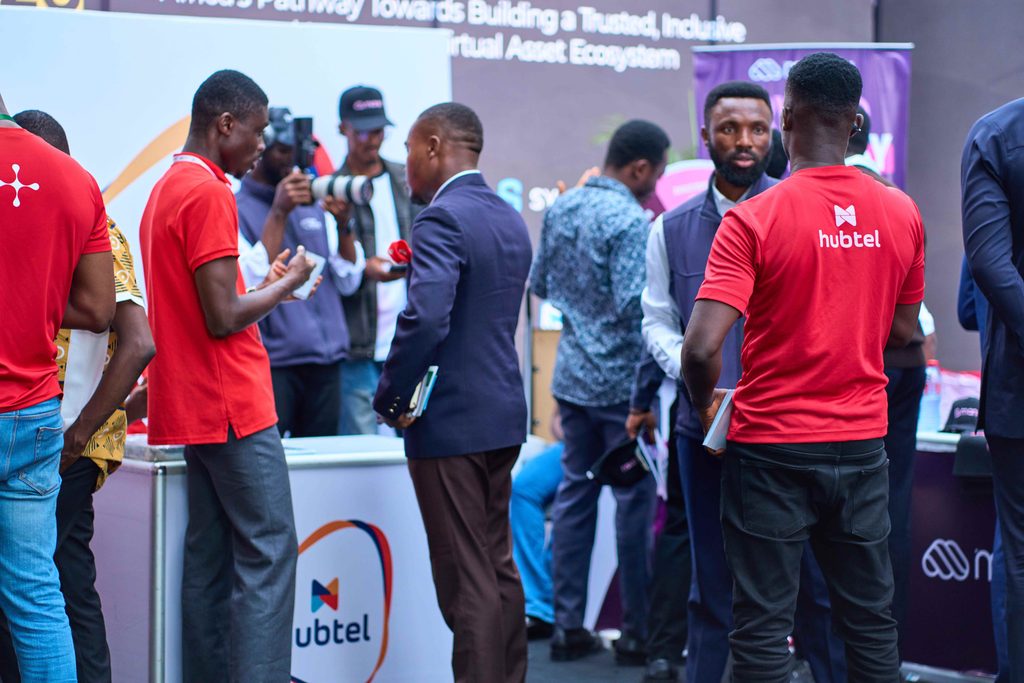
Hubtel’s Place in Africa’s Digital Financial Future
Hubtel’s participation extended beyond the summit discussions, with the team engaging attendees at its booth and showcasing the company’s payment and business management solutions for businesses.
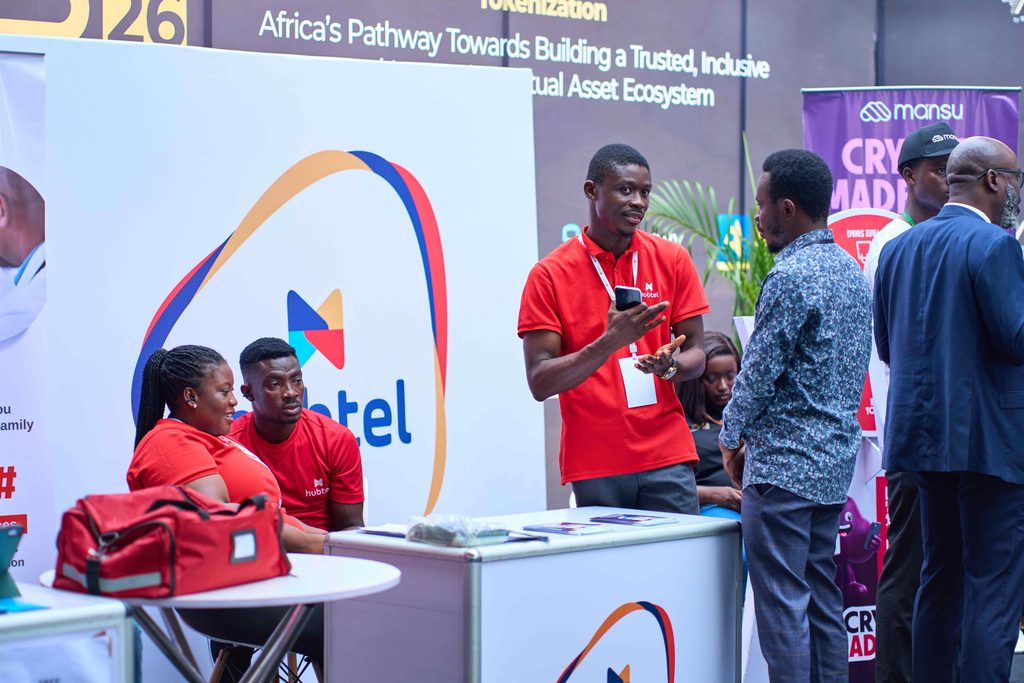
As Ghana’s virtual asset industry takes shape, Hubtel is keen to explore ways it can participate in the space. We hope to be part of this growing ecosystem when the Bank of Ghana’s regulatory framework allows Payment Service Providers (PSPs) to offer virtual asset services.
Warning: Constant COLOR_SCHEME_BLUE already defined in /var/www/html/bloghubtel/wp-content/themes/bloghubtel/template-parts/content-mobile-app-banner.php on line 3
Warning: Constant COLOR_SCHEME_RED already defined in /var/www/html/bloghubtel/wp-content/themes/bloghubtel/template-parts/content-mobile-app-banner.php on line 4
Warning: Constant COLOR_SCHEME_LIGHT already defined in /var/www/html/bloghubtel/wp-content/themes/bloghubtel/template-parts/content-mobile-app-banner.php on line 5
Warning: Constant FACEBOOK_SHARE_URL already defined in /var/www/html/bloghubtel/wp-content/themes/bloghubtel/template-parts/content-mobile-app-banner.php on line 8
Warning: Constant LINKEDIN_SHARE_URL already defined in /var/www/html/bloghubtel/wp-content/themes/bloghubtel/template-parts/content-mobile-app-banner.php on line 9
Warning: Constant TWITTER_SHARE_URL already defined in /var/www/html/bloghubtel/wp-content/themes/bloghubtel/template-parts/content-mobile-app-banner.php on line 10
Warning: Constant WHATSAPP_SHARE_URL already defined in /var/www/html/bloghubtel/wp-content/themes/bloghubtel/template-parts/content-mobile-app-banner.php on line 11
Warning: Constant CUSTOM_ADS_CONTENT_WRAPPER already defined in /var/www/html/bloghubtel/wp-content/themes/bloghubtel/template-parts/content-mobile-app-banner.php on line 14
Warning: Constant IMAGE_WRAPPER_CLASSES already defined in /var/www/html/bloghubtel/wp-content/themes/bloghubtel/template-parts/content-mobile-app-banner.php on line 15
Warning: Constant APPLE_APP_STORE_URL already defined in /var/www/html/bloghubtel/wp-content/themes/bloghubtel/template-parts/content-mobile-app-banner.php on line 18
Warning: Constant GOOGLE_PLAY_STORE_URL already defined in /var/www/html/bloghubtel/wp-content/themes/bloghubtel/template-parts/content-mobile-app-banner.php on line 19
Warning: Constant HUAWEI_APP_GALLERY_URL already defined in /var/www/html/bloghubtel/wp-content/themes/bloghubtel/template-parts/content-mobile-app-banner.php on line 20
Related
Hubtel CEO Alex Bram declares the missing ingredient in Ghana’s debit economy found, as Albrim launches Pay Small Small
November 18, 2026| 6-minute read
Star Assurance HR team visits Hubtel to learn how people grow in a hybrid workplace
November 18, 2026| 4-minute read
Hubtel Mentors Young Fintech Innovators at MoMo Fintech Lab Accra
November 12, 2026| 5-minute read

ECG Launches Franchise Network to Strengthen Revenue Collection and Bring PowerApp Services Closer to Customers.
The Electricity Company of Ghana (ECG) launched its new franchise network on 29 October 2026 at ECG’s Eastern Regional Office, Koforidua, bringing community-based customer support together with the ECG PowerApp and other approved payment channels to strengthen revenue collection.
Led by ECG’s Managing Director, Ing. Kwame Kpekpena and the management team, the initiative brings ECG’s commercial services to customers’ doorsteps through approved partner companies and individuals. Franchise officers help customers pay bills, read meters and resolve billing questions in their own communities. Several teams within ECG worked with Hubtel and Polymorph Labs to make the initiative possible.
Speaking on behalf of Hubtel CEO Alex Bram, Patrick Asare-Frimpong, Head of Products at Hubtel, said the launch was about giving every customer three things: “to pay easily, to be served with respect, and to understand what they are paying for.”
Strengthening revenue collection through the ECG PowerApp
The ECG PowerApp gives customers a way to buy prepaid electricity credit and pay postpaid bills from their phones. The franchise network extends support for these services into communities, helping customers use ECG’s digital channels and understand their bills.
For ECG, the aim is to make payment easier while ensuring that collections reach the utility through approved channels. The network connects face-to-face assistance with digital payment services, so customers who need help can receive it closer to home.
Speaking about Hubtel’s supporting role, Asare-Frimpong described the work behind the payment services. “We have built payment channels, worked through reconciliations around the clock, and improved the experience ECG customers have every time they buy power,” he said. “Through every challenge, we have remained proud of our work and grateful for the opportunity given to local tech companies to showcase what we can do.”
Asare-Frimpong linked Hubtel’s commitment to ECG’s revenue collection and customer service goals. “Your commercial goals are our collective goals,” Asare-Frimpong said. “When ECG collects more, serves better, and earns more trust from Ghanaians, the entire economy (both digital and analogue) succeeds.”
READ ALSO: How Hubtel Is Rethinking AI in Ghana: Own Your Data, Rent the Intelligence
Verify any franchise officer on the spot
Customer trust is central to ECG’s franchise network. Customers can check whether an officer genuinely represents ECG before making a payment or sharing details. ECG teams worked Hubtel and Polymorph Labs, which built the core Franchise Officer platform, to support officer verification under ECG management’s direction.
Customers can verify an officer in two ways:
• USSD: dial *226# and enter the officer’s staff ID.
• ECG PowerApp: go to Get Help > Verify Franchise Office to enter the staff ID or scan the QR code on the officer’s identification.
The check confirms at once whether the person truly represents ECG. “No more fear of fraudsters. No more doubt,” Asare-Frimpong said. “Just confidence that the person helping you truly represents ECG.”
Verification supports ECG’s revenue protection efforts by helping customers distinguish authorised officers from impostors. ECG has said franchise officers will help customers pay through the ECG PowerApp and *226#, and that cash payments to officers are not allowed. Officers provide assistance; payments must go through ECG’s approved digital channels.
Supporting ECG’s service in communities
Franchise partners will represent ECG in their communities, explaining bills, helping traders buy power before closing time and guiding customers who need assistance with the ECG PowerApp.
“When a grandmother cannot navigate an app, you will patiently help her,” Asare-Frimpong said. “That is not a small job. That is service.”
Hubtel promised the partners the tools, training and support they need to serve customers well. “Your staff ID and QR code are more than identification – they are your badge of trust, and every customer can see it,” he said.
For customers, the network is intended to make electricity payments easier, with local support for using the ECG PowerApp and clearer answers about their bills.
An ECG-led effort to bring service closer
The franchise launch is an ECG-led initiative to bring commercial services closer to customers and strengthen revenue collection. Its delivery reflects collaboration across ECG’s teams, with support from Hubtel and Polymorph Labs. The ECG PowerApp and approved digital payment channels connect that community service to the utility’s collection efforts.
“When the history of how Ghana powered its homes and businesses is written, I hope it will say that this was the day the electricity service moved closer to the people in-person through the Franchise Officers,” Asare-Frimpong said.
“Thank you to ECG for your trust, and thank you to our franchise partners for your courage. We know that working together we can make ECG the most successful SOE and Ghana’s energy sector much stronger.”
Warning: Constant COLOR_SCHEME_BLUE already defined in /var/www/html/bloghubtel/wp-content/themes/bloghubtel/template-parts/content-mobile-app-banner.php on line 3
Warning: Constant COLOR_SCHEME_RED already defined in /var/www/html/bloghubtel/wp-content/themes/bloghubtel/template-parts/content-mobile-app-banner.php on line 4
Warning: Constant COLOR_SCHEME_LIGHT already defined in /var/www/html/bloghubtel/wp-content/themes/bloghubtel/template-parts/content-mobile-app-banner.php on line 5
Warning: Constant FACEBOOK_SHARE_URL already defined in /var/www/html/bloghubtel/wp-content/themes/bloghubtel/template-parts/content-mobile-app-banner.php on line 8
Warning: Constant LINKEDIN_SHARE_URL already defined in /var/www/html/bloghubtel/wp-content/themes/bloghubtel/template-parts/content-mobile-app-banner.php on line 9
Warning: Constant TWITTER_SHARE_URL already defined in /var/www/html/bloghubtel/wp-content/themes/bloghubtel/template-parts/content-mobile-app-banner.php on line 10
Warning: Constant WHATSAPP_SHARE_URL already defined in /var/www/html/bloghubtel/wp-content/themes/bloghubtel/template-parts/content-mobile-app-banner.php on line 11
Warning: Constant CUSTOM_ADS_CONTENT_WRAPPER already defined in /var/www/html/bloghubtel/wp-content/themes/bloghubtel/template-parts/content-mobile-app-banner.php on line 14
Warning: Constant IMAGE_WRAPPER_CLASSES already defined in /var/www/html/bloghubtel/wp-content/themes/bloghubtel/template-parts/content-mobile-app-banner.php on line 15
Warning: Constant APPLE_APP_STORE_URL already defined in /var/www/html/bloghubtel/wp-content/themes/bloghubtel/template-parts/content-mobile-app-banner.php on line 18
Warning: Constant GOOGLE_PLAY_STORE_URL already defined in /var/www/html/bloghubtel/wp-content/themes/bloghubtel/template-parts/content-mobile-app-banner.php on line 19
Warning: Constant HUAWEI_APP_GALLERY_URL already defined in /var/www/html/bloghubtel/wp-content/themes/bloghubtel/template-parts/content-mobile-app-banner.php on line 20
Related
Hubtel CEO Alex Bram declares the missing ingredient in Ghana’s debit economy found, as Albrim launches Pay Small Small
November 18, 2026| 6-minute read
Star Assurance HR team visits Hubtel to learn how people grow in a hybrid workplace
November 18, 2026| 4-minute read
Hubtel Mentors Young Fintech Innovators at MoMo Fintech Lab Accra
November 12, 2026| 5-minute read
How Hubtel Is Rethinking AI in Ghana: Own Your Data, Rent the Intelligence
From the trader at Makola checking prices on her phone to the graduate in Kumasi searching for work, one question is getting louder across Ghana. Will artificial intelligence make life better, or will it take away what people already have?
Ghana has placed its bet. In 2025 it launched a ten-year national AI strategy, and government has committed $270 million to get the country ready. But for ordinary Ghanaians, the most useful answers may come from a local company that has already tried, stumbled and found a smarter way forward.
That company is Hubtel. Head of Engineering, Augustine Adjei, told the national audience during the premiere of the AI & Ghana’s documentary on Joy News, exactly what Ghana’s AI journey looks like from the inside, and why the country does not need to start big to win.
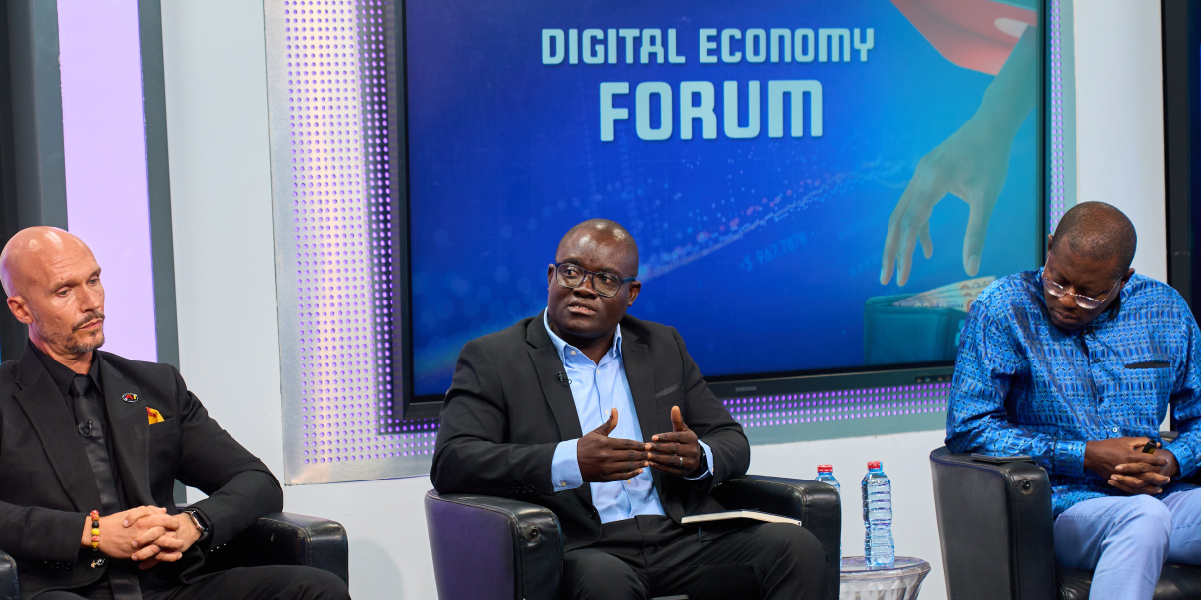
About the Digital Economy Forum
The Digital Economy Forum is a national thought-leadership platform conceived by Hubtel to create evidence-based conversations about the technologies, policies and ideas shaping Ghana’s economic future. It combines original documentary storytelling with a televised debate on JoyNews and Joy FM, bringing together government, regulators, businesses, academics and everyday Ghanaians.
The maiden edition tackled digital fraud and why trust matters in Ghana’s growing digital economy. The latest edition asked a bigger question: AI and the Ghana economy, opportunity or disruption?
For Hubtel, which helps Ghanaians pay bills, send money and order goods, the stakes are personal. A digital economy only grows when people trust it, understand it and can benefit from it. The forum is Hubtel’s way of making sure that conversation happens in public, with the facts on the table and ordinary people in the room.
READ ALSO: Relax. AI is Not Taking Your Job
Opportunity or disruption? Both, says Hubtel
Asked whether AI is good or bad news for Ghana, Augustine Adjei refused to pick one side. “It is both,” he said. “Growth is hard and painful, but the disruption is a setback while the opportunity is exponential.”
He compared it to a catapult. You get pulled back first, and that painful pull is what launches you forward. Change will hurt in places, but those who prepare will move faster than ever.
When Hubtel tried to build its own AI
Hubtel opened an AI lab in 2023, before chat apps like ChatGPT became part of everyday life. It hired skilled Ghanaian engineers to build AI from scratch.
The lab’s biggest project helped the Electricity Company of Ghana (ECG) catch power theft. The system flagged meters that seemed not to be paying, traced back through the records and connected the dots. Hubtel also built its own fraud detection and call-centre tools.
Then the world moved faster and cheaper. By 2025, global AI companies were selling far more powerful tools for about $20 to $25 a month. Hubtel did what any smart trader does when a better product appears at a lower price. It stopped trying to outbuild the giants and started buying access.
Talent Isn’t the Problem
Augustine Adjei explained the decision with a picture every Ghanaian understands. “Would you want an Italian chef to cook your fufu and light soup, or an equally competent Ghanaian chef who has lived here all their life?” he asked.
The answer is obvious: the Ghanaian chef. But training that chef takes time and money. Until then, you hire the chef who can feed you today while you plan for tomorrow.
He was clear that Ghana’s problem has never been brains. “Talent is equally distributed; resources are not,” he said. Hubtel had the people. What it did not have was the hundreds of millions of dollars global firms spend on AI.
Own your data, rent the engine
Hubtel did not just sign up for a free chatbot. It negotiated directly with leading global AI companies, which were surprised a Ghanaian firm could pay at that level.
Under the deal, Hubtel runs the AI inside its own systems, keeps full ownership of its data, and the providers have promised not to use Hubtel’s information to train their models. Augustine Adjei summed up the rule simply: “Own what you can before you scale.”
He also shared a funny but serious warning. When Hubtel tested a free AI model and asked it about the company, the model said Hubtel was headquartered in Kigali. AI only knows what you teach it, so Ghanaians must feed it Ghanaian facts.
The best example of this thinking is Hubtel’s virtual call centre. Because so many Ghanaians transact on Hubtel every day, the phones ring constantly. An AI agent now answers first and can check a customer’s order status on the spot.
It works because all the information it needs already belongs to Hubtel. It is built in Ghana, trained on Ghanaian data and speaks to customers in a Ghanaian accent.
For Augustine Adjei, that is the point. “AI is not a thing, it is us. There is no AI without humans,” he said. “If we are biased, AI will be biased.”
Honorable Sam George backs the Hubtel approach
Communications Minister of Ghana, Honorable Sam George said Hubtel’s story shows why Ghana must fix its data first. “AI models are only as good as their data sets,” he said.
Hubtel had found no simple way for companies in Ghana to share data. The Minister said government is building a national data exchange hub to connect about 48 public registries, from the Ghana Health Service to the National Identification Authority, so developers make one request instead of 48. Companies are welcome to join, as long as they contribute data too.
On jobs, he echoed Hubtel’s message that people must grow with the technology. “Those who evolve and adapt will survive,” he said. “Those who fail to evolve and adapt will fall off.”
Bright Simmons of Imani Africa, the night’s toughest critic of government spending, held up Hubtel as an example of doing AI in the right order: use a proven global tool first, then build local. “If you don’t define your problem extremely well, AI can’t give you answers,” he warned, adding: “We should not stay on the surface.”
Five lessons for every Ghanaian
You do not need to be a tech company to learn from Hubtel. Whether you run a chop bar, a boutique or a small office, the same rules apply:
- Start with what you already have. Your customer list, your records and the way you work are your biggest AI asset.
- Use what works today. Global AI tools are cheap and powerful, so use them while local options grow.
- Guard your information. Keep control of your data and know where it goes.
- Teach the AI about Ghana. If a tool thinks Hubtel is in Kigali, it can get your business wrong too.
- Think before you upload. Augustine Adjei said his phone holds his 74-year-old mother’s medical record, and he would not run it through a public chatbot without protection.
Ghana’s AI future will not be decided by one big announcement. It will be shaped by businesses and individuals who test, learn, adjust and keep going.
Hubtel has shown a practical path for the whole country: own your data, rent the engine, solve real problems for real customers and keep your people learning. Through the Digital Economy Forum, it is making sure every Ghanaian gets to hear that conversation.
Warning: Constant COLOR_SCHEME_BLUE already defined in /var/www/html/bloghubtel/wp-content/themes/bloghubtel/template-parts/content-mobile-app-banner.php on line 3
Warning: Constant COLOR_SCHEME_RED already defined in /var/www/html/bloghubtel/wp-content/themes/bloghubtel/template-parts/content-mobile-app-banner.php on line 4
Warning: Constant COLOR_SCHEME_LIGHT already defined in /var/www/html/bloghubtel/wp-content/themes/bloghubtel/template-parts/content-mobile-app-banner.php on line 5
Warning: Constant FACEBOOK_SHARE_URL already defined in /var/www/html/bloghubtel/wp-content/themes/bloghubtel/template-parts/content-mobile-app-banner.php on line 8
Warning: Constant LINKEDIN_SHARE_URL already defined in /var/www/html/bloghubtel/wp-content/themes/bloghubtel/template-parts/content-mobile-app-banner.php on line 9
Warning: Constant TWITTER_SHARE_URL already defined in /var/www/html/bloghubtel/wp-content/themes/bloghubtel/template-parts/content-mobile-app-banner.php on line 10
Warning: Constant WHATSAPP_SHARE_URL already defined in /var/www/html/bloghubtel/wp-content/themes/bloghubtel/template-parts/content-mobile-app-banner.php on line 11
Warning: Constant CUSTOM_ADS_CONTENT_WRAPPER already defined in /var/www/html/bloghubtel/wp-content/themes/bloghubtel/template-parts/content-mobile-app-banner.php on line 14
Warning: Constant IMAGE_WRAPPER_CLASSES already defined in /var/www/html/bloghubtel/wp-content/themes/bloghubtel/template-parts/content-mobile-app-banner.php on line 15
Warning: Constant APPLE_APP_STORE_URL already defined in /var/www/html/bloghubtel/wp-content/themes/bloghubtel/template-parts/content-mobile-app-banner.php on line 18
Warning: Constant GOOGLE_PLAY_STORE_URL already defined in /var/www/html/bloghubtel/wp-content/themes/bloghubtel/template-parts/content-mobile-app-banner.php on line 19
Warning: Constant HUAWEI_APP_GALLERY_URL already defined in /var/www/html/bloghubtel/wp-content/themes/bloghubtel/template-parts/content-mobile-app-banner.php on line 20
Related
Hubtel CEO Alex Bram declares the missing ingredient in Ghana’s debit economy found, as Albrim launches Pay Small Small
November 18, 2026| 6-minute read
Star Assurance HR team visits Hubtel to learn how people grow in a hybrid workplace
November 18, 2026| 4-minute read
Hubtel Mentors Young Fintech Innovators at MoMo Fintech Lab Accra
November 12, 2026| 5-minute read

Hubtel Developer Guide: Adding Mobile Money Checkout to Any Website
This guide shows you how to accept Mobile Money and card payments on any website with the Hubtel Online Checkout API. By the end of it, you will have a website that sends a customer to Hubtel’s hosted checkout, receives the payment result, and confirms the payment on your server before delivering anything.
The pattern has four moves. Your server creates a payment request. Hubtel collects the money on its checkout page. Hubtel tells your server the result. Your server double-checks that result before it marks an order as paid.
This guide is for developers who already build web back ends. The examples use PHP and Node.js, but the steps are the same in any language. Every credential, URL and reference in the examples is a placeholder. Replace them with your own values and keep the secrets on the server.
In this guide
- Before you start
- How the Hubtel checkout flow works
- Steps 1 to 6: credentials, payment request, checkout page, callback, status check and duplicate protection
- Testing your Hubtel integration and going live
- Common Hubtel integration problems and fixes
- Security checklist
- Frequently asked questions
Before you start
You need five things in place before you write any code.
- A verified Hubtel merchant account. Hubtel requires every business that integrates payments to hold a merchant account that has been verified and approved. If you do not have one, you can signup for one.
- An API ID and API Key. Generate them in your Hubtel dashboard. Ask your Hubtel engineer to add the right scopes to the keys, or your requests will be refused.
- Your merchant account number. Hubtel’s docs call it your Collection Account Number. It is required in the checkout request and in the status check URL, so keep it with your keys.
- A public HTTPS address for callbacks. Hubtel must be able to reach your callback URL from the internet, so localhost will not work. For local testing, point the callback at a tunnel or a webhook tester such as ngrok, Webhook Tester or Request Catcher, as Hubtel suggests.
- A static server IP, ideally. Hubtel asks merchants to have a static IP whitelisted before they call its status check endpoint, so ask your Hubtel engineer to whitelist your server’s outbound IP early. Shared hosts often change IPs, so confirm yours is stable. Hubtel allows up to four IP addresses per service, and requests from any other address get a 403 error or time out.
All calls to Hubtel must come from your server. Your API Key must never appear in browser code, a mobile app bundle or a public repository.
The online checkout accepts Mobile Money and card payments, and Hubtel’s documentation also lists wallets (Hubtel and G-Money), GhQR and cash or cheque. You do not build any payment screens yourself, because Hubtel hosts the checkout page.
Hubtel does not provide a sandbox or test environment. Every test you run is a real payment against your live account, which changes how you plan your testing. The “Testing and going live” section below covers how to work around that safely.
How the Hubtel checkout flow works
Your server does the work that matters. It creates the request, receives the result, and confirms that result with Hubtel before it delivers anything.
The full sequence runs like this.
- A customer chooses to pay on your site.
- Your server creates a pending payment row and calls Hubtel to start the payment.
- Hubtel returns a checkout URL.
- Your server redirects the customer to Hubtel’s checkout page.
- The customer pays with Mobile Money, a bank card, a wallet or GhQR.
- Hubtel posts the result to your callback URL.
- Hubtel returns the customer to your return URL.
- Your server runs a status check against Hubtel.
- Your server marks the payment paid and delivers the order.
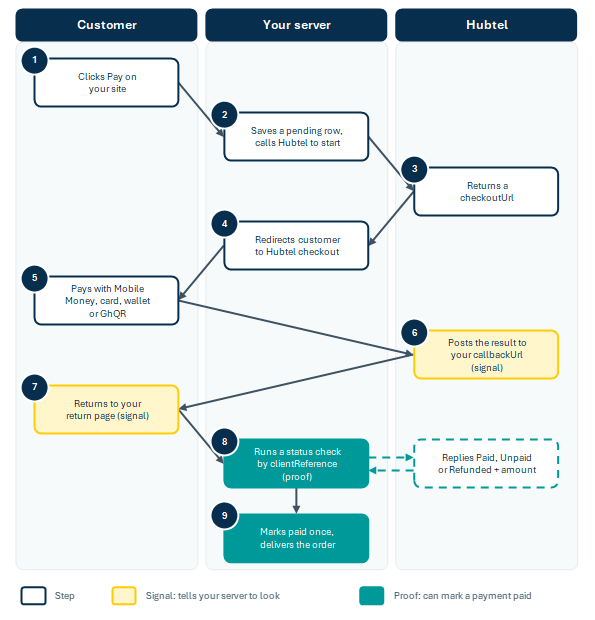
Figure 1. The Hubtel checkout flow in nine steps. The callback and the return page are signals; only the status check and the paid update can mark a payment as paid.
Steps 6 and 7 are signals that tell your server to look. Steps 8 and 9 are the proof, and only they can mark a payment as paid. Hubtel describes a checkout invoice as pending, completed or cancelled.
The next six sections build each step in order, with PHP and Node.js code for every one.
Step 1. Keep your credentials safe
Hubtel authenticates every request with HTTP Basic Auth. You Base64-encode APIID:APIKey and send it in the Authorization header.
Store the values in environment variables or a config file kept outside your public web folder. Never put them in a database column that a plugin can export, in front-end JavaScript, or in version control.
<?php
// config.php  (keep this outside the public web root)
return [
     'api_id'      => getenv('HUBTEL_API_ID'),
     'api_key'     => getenv('HUBTEL_API_KEY'),
     'merchant_no' => getenv('HUBTEL_MERCHANT_ACCOUNT'),
     'callback_token' => getenv('HUBTEL_CALLBACK_TOKEN'),   // a long random string
     'base_url'    => rtrim((string) getenv('APP_BASE_URL'), '/'),  // e.g. https://shop.example.com
];

function hubtel_auth_header(array $cfg): string {
     return 'Basic ' . base64_encode($cfg['api_id'] . ':' . $cfg['api_key']);
}
The same idea in Node.js:
// config.js
export const cfg = {
   apiId: process.env.HUBTEL_API_ID,
   apiKey: process.env.HUBTEL_API_KEY,
   merchantNo: process.env.HUBTEL_MERCHANT_ACCOUNT,
   callbackToken: process.env.HUBTEL_CALLBACK_TOKEN,   // a long random string
   baseUrl: (process.env.APP_BASE_URL || '').replace(/\/$/, ''),
};

export const authHeader =
   'Basic ' + Buffer.from(`${cfg.apiId}:${cfg.apiKey}`).toString('base64');
Do not write the Authorization header to your logs. If a key ever shows up in a log, a screenshot or a chat, generate a new one in the dashboard and delete the old one.
Step 2. Create a payment request
You start a payment by sending one POST request from your server to https://payproxyapi.hubtel.com/items/initiate. Use exactly this host. Sending the same body to a different Hubtel host, or with differently named fields, can fail without a clear error message.
| Field | Type | Required | What to send |
| totalAmount | number | Yes | The amount in GHS, calculated on your server, with no more than two decimal places |
| description | string | Yes | A short line the customer sees, such as “Order 123”. Special characters are not accepted |
| callbackUrl | string | Yes | Public HTTPS URL on your server that receives the final result |
| returnUrl | string | Yes | Page the customer lands on after paying |
| cancellationUrl | string | Yes | Page the customer lands on if they cancel |
| clientReference | string | Yes | Your unique reference, 32 characters at most |
| merchantAccountNumber | string | Yes | Your Collection Account Number |
| payeeName, payeeMobileNumber, payeeEmail | string | No | Customer details, if you want them on the invoice |
Three rules save you from most payment bugs.
- Always work out the amount on the server. Look up the price in your own database. Never trust an amount sent from the browser.
- Create the payment record first. Insert a row with status pending and your clientReference, then call Hubtel. A callback can then always find its row.
- Use a new clientReference for every attempt. One order can have several attempts if a customer cancels and tries again. Link each attempt to the order in your table.
Here is the request in PHP:
function hubtel_initiate(array $cfg, array $order): array {
     $payload = [
         'totalAmount'           => round($order['amount'], 2),
         'description'           => 'Order ' . $order['id'],
         'callbackUrl'           => $cfg['base_url'] . '/hubtel/callback.php?token=' . $cfg['callback_token'],
         'returnUrl'             => $cfg['base_url'] . '/payment/return.php?ref=' . $order['client_reference'],
         'cancellationUrl'       => $cfg['base_url'] . '/payment/cancelled.php?ref=' . $order['client_reference'],
         'merchantAccountNumber' => $cfg['merchant_no'],
         'clientReference'       => $order['client_reference'],   // unique, max 32 characters
     ];

    $ch = curl_init('https://payproxyapi.hubtel.com/items/initiate');
     curl_setopt_array($ch, [
         CURLOPT_POST           => true,
         CURLOPT_POSTFIELDS     => json_encode($payload),
         CURLOPT_RETURNTRANSFER => true,
         CURLOPT_TIMEOUT        => 30,
         CURLOPT_HTTPHEADER     => [
             'Content-Type: application/json',
             'Accept: application/json',
             'Authorization: ' . hubtel_auth_header($cfg),
         ],
     ]);
     $body = curl_exec($ch);
     $http = curl_getinfo($ch, CURLINFO_HTTP_CODE);
     $err  = curl_error($ch);
     curl_close($ch);

    if ($body === false) {
         throw new RuntimeException('Hubtel unreachable: ' . $err);
     }
     $json = json_decode($body, true);
     if ($http !== 200 || ($json['responseCode'] ?? '') !== '0000' || empty($json['data']['checkoutUrl'])) {
         error_log('Hubtel initiate failed: HTTP ' . $http . ' ' . substr($body, 0, 500));
         throw new RuntimeException('Could not start the payment. Please try again.');
     }
     return $json['data'];   // checkoutUrl, checkoutId, clientReference, checkoutDirectUrl
}
And in Node.js:
export async function hubtelInitiate(order) {
   const res = await fetch('https://payproxyapi.hubtel.com/items/initiate', {
     method: 'POST',
     signal: AbortSignal.timeout(30000),   // give up after 30 seconds
     headers: {
       'Content-Type': 'application/json',
       Accept: 'application/json',
       Authorization: authHeader,
     },
     body: JSON.stringify({
       totalAmount: Number(order.amount.toFixed(2)),
       description: `Order ${order.id}`,
       callbackUrl: `${cfg.baseUrl}/hubtel/callback?token=${cfg.callbackToken}`,
       returnUrl: `${cfg.baseUrl}/payment/return?ref=${order.clientReference}`,
       cancellationUrl: `${cfg.baseUrl}/payment/cancelled?ref=${order.clientReference}`,
       merchantAccountNumber: cfg.merchantNo,
       clientReference: order.clientReference,
     }),
   });

  const json = await res.json().catch(() => ({}));
   if (!res.ok || json.responseCode !== '0000' || !json.data?.checkoutUrl) {
     console.error('Hubtel initiate failed', res.status, JSON.stringify(json).slice(0, 500));
     throw new Error('Could not start the payment. Please try again.');
   }
   return json.data;
}
A successful response has responseCode 0000 and a data object. Hubtel’s documented example looks like this:
{
   "responseCode": "0000",
   "status": "Success",
   "data": {
     "checkoutUrl": "https://pay.hubtel.com/<checkout-id>",
     "checkoutId": "<checkout-id>",
     "clientReference": "ORD-000123-8F2K",
     "message": "",
     "checkoutDirectUrl": "https://pay.hubtel.com/<checkout-id>/direct"
   }
}
Save checkoutId against your payment row. Keep your own error message short, because the raw response belongs in your server log and not on the customer’s screen.
Step 3. Send the customer to checkout
Hubtel gives you two ways to show the checkout page, and the response from Step 2 contains the link for each.
| Option | Use this link | How it works |
| Redirect checkout | checkoutUrl | You send the customer to Hubtel’s page, then Hubtel sends them back to your returnUrl |
| Onsite checkout | checkoutDirectUrl | You load Hubtel’s page inside an iframe on your own page |
Redirect checkout is the simplest and works well on phones, so start there. On the Hubtel page the customer enters their mobile number, chooses how to pay, and confirms their identity with a one-time code sent to their phone. Onsite checkout can also use a QR code scanned in the Hubtel app.
To redirect, send an HTTP redirect to checkoutUrl as soon as Step 2 succeeds:
In PHP:
$data = hubtel_initiate($cfg, $order);
save_checkout_id($order['client_reference'], $data['checkoutId']);
header('Location: ' . $data['checkoutUrl'], true, 303);
exit;
In Node.js:
const data = await hubtelInitiate(order);
await saveCheckoutId(order.clientReference, data.checkoutId);
res.redirect(303, data.checkoutUrl);
Using onsite checkout instead
If you would rather keep customers on your own page, load checkoutDirectUrl in an iframe, which is how Hubtel recommends showing onsite checkout. Everything from Step 4 onwards stays the same: the callback still reaches your callbackUrl, your returnUrl still loads when payment ends, and the status check still decides.
<iframe
src="<?= htmlspecialchars($data['checkoutDirectUrl']) ?>"
title="Hubtel checkout"
width="100%"
height="720"
style="border: 0;"
>
</iframe>
The return page
The return page tells the customer what happened. It must never decide that an order is paid. Anyone can type a return URL into a browser, including one that ends in ?paid=1 or ?status=success, so treat the query string as a hint and nothing more.
On arrival, look up the payment in your own database using the reference. If it is still pending, the callback has not landed yet, so ask Hubtel directly using the status check in Step 5.
// payment/return.php
$ref = preg_replace('/[^A-Za-z0-9_-]/', '', $_GET['ref'] ?? '');
$payment = find_payment_by_reference($ref);          // your database lookup

if (!$payment) { http_response_code(404); exit('Payment not found.'); }

if ($payment['status'] === 'pending') {
     $payment = verify_with_hubtel($payment);         // Step 5
}

switch ($payment['status']) {
     case 'paid':   show_success_page($payment); break;
     case 'cancelled': case 'expired': show_failed_page($payment); break;
     default:       show_waiting_page($payment); // "We are confirming your payment" + auto refresh
}
The cancel page
Show a calm message and a “Try again” button. The button must create a new payment attempt with a new clientReference, then repeat Step 2. Do not reuse the old reference.
Step 4. Receive the callback
When the payment finishes, Hubtel sends a POST request with a JSON body to your callbackUrl. Hubtel’s documented example looks like this, with placeholder values here:
{
   "ResponseCode": "0000",
   "Status": "Success",
   "Data": {
     "CheckoutId": "<checkout-id>",
     "SalesInvoiceId": "<invoice-id>",
     "ClientReference": "ORD-000123-8F2K",
     "Status": "Success",
     "Amount": 50.0,
     "CustomerPhoneNumber": "233XXXXXXXXX",
     "PaymentDetails": {
       "MobileMoneyNumber": "233XXXXXXXXX",
       "PaymentType": "mobilemoney",
       "Channel": "mtn-gh"
     },
     "Description": "The MTN Mobile Money payment has been approved and processed successfully."
   }
}
Notice that the callback keys start with capital letters, while the Step 2 response uses lower-case keys. Read them exactly as written.
Your callback handler should follow five rules.
- Answer fast. Return HTTP 200 as soon as you have stored the payload, then do any slow work afterwards.
- Keep the raw payload. Save it with a timestamp. It is the first thing you will want when a customer says “I paid”.
- Find the payment by ClientReference. Ignore callbacks that match no payment row.
- Do not trust the callback alone. Anyone who finds your callback URL can send a fake request. Use the callback as a signal to run the status check in Step 5.
- Protect the URL. Add a long random token to your callback URL when you create the request, and reject calls without it. Test that Hubtel keeps the query string on your URL. As an extra layer, you can also allow Hubtel’s callback IP address, 108.129.40.25, on your firewall.
In PHP:
// hubtel/callback.php
$raw = file_get_contents('php://input');
error_log('Hubtel callback: ' . $raw);

if (!hash_equals($cfg['callback_token'], $_GET['token'] ?? '')) {
     http_response_code(403);
     exit;
}

$data    = json_decode($raw, true);
$ref     = $data['Data']['ClientReference'] ?? '';
$payment = find_payment_by_reference($ref);

http_response_code(200);                       // acknowledge first
header('Content-Type: application/json');
echo json_encode(['received' => true]);
if (function_exists('fastcgi_finish_request')) { fastcgi_finish_request(); }

if (!$payment) { exit; }

record_callback($payment['id'], $raw);         // store payload + time
verify_with_hubtel($payment);                  // Step 5 decides paid or failed
In Node.js:
app.post('/hubtel/callback', express.json(), async (req, res) => {
   if (req.query.token !== cfg.callbackToken) return res.sendStatus(403);
   console.log('Hubtel callback', JSON.stringify(req.body));
   res.status(200).json({ received: true });    // acknowledge first

  const ref = req.body?.Data?.ClientReference;
   const payment = await findPaymentByReference(ref);
   if (!payment) return;

  await recordCallback(payment.id, req.body);  // store payload + time
   await verifyWithHubtel(payment);             // Step 5 decides paid or failed
});
Do not assume that only successful payments reach this URL, and do not assume each callback arrives once. Step 6 covers duplicates.
Step 5. Verify the payment with a status check
The status check is what turns “Hubtel says it was paid” into “we confirmed it was paid”. Run it before you give the customer anything, and run it whenever a callback goes missing.
Hubtel is strict about this. If you do not receive the final status of a payment within five minutes, a status check is mandatory. Hubtel also asks you to have your server’s static IP whitelisted before you call the status endpoint.
The check is a GET request keyed on your merchant account number and your clientReference.
The code below uses the form https://api-txnstatus.hubtel.com/transactions/{merchant account number}/status?clientReference={your reference}.
Use your Collection Account Number in the URL. Hubtel returns the result in data.status as Paid, Unpaid or Refunded, with the amount in data.amount. Keep the URL and status values in one config file so a change is a one-line edit.
Whatever the response says, apply three safety rules.
- Only a clearly paid status counts as paid. Anything else stays pending.
- Compare the amount. If Hubtel reports a different amount from the one you stored, do not fulfil the order. Flag it for a person to review.
- Never fail a payment because the check itself failed. A timeout or an error from Hubtel means “try again later”, not “unpaid”.
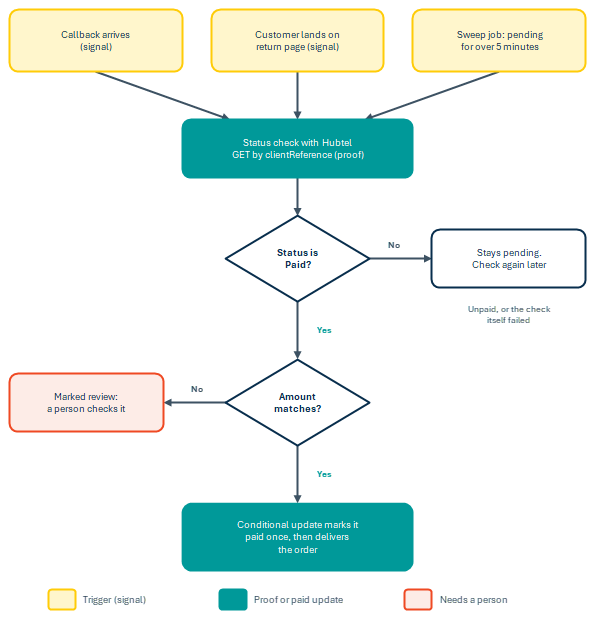
Figure 2. Every trigger ends at the same status check, and only a paid status with a matching amount reaches delivery.
In PHP:
// Put these in config. Hubtel returns Paid, Unpaid or Refunded (compared in lower case below).
const HUBTEL_STATUS_URL    = 'https://api-txnstatus.hubtel.com/transactions/';
const HUBTEL_PAID_STATUSES = ['paid'];

function verify_with_hubtel(array $payment): array {
     global $cfg;
     $url = HUBTEL_STATUS_URL . rawurlencode($cfg['merchant_no'])
          . '/status?clientReference=' . rawurlencode($payment['client_reference']);

    $ch = curl_init($url);
     curl_setopt_array($ch, [
         CURLOPT_RETURNTRANSFER => true,
         CURLOPT_TIMEOUT        => 20,
         CURLOPT_HTTPHEADER     => ['Accept: application/json', 'Authorization: ' . hubtel_auth_header($cfg)],
     ]);
     $body = curl_exec($ch);
     $http = curl_getinfo($ch, CURLINFO_HTTP_CODE);
     curl_close($ch);

    if ($body === false || $http !== 200) {
         return $payment;                         // could not check, so leave it pending
     }

    $json   = json_decode($body, true) ?: [];
     $d      = $json['data'] ?? [];
     $status = strtolower((string) ($d['status'] ?? ''));
     $amount = isset($d['amount']) ? (float) $d['amount'] : null;

    if (in_array($status, HUBTEL_PAID_STATUSES, true)) {
         if ($amount === null || abs($amount - (float) $payment['amount']) > 0.01) {
             return mark_payment($payment['id'], 'review', $body);   // paid, but the amount is wrong
         }
         return mark_payment_paid($payment['id'], $body);            // Step 6
     }
     return $payment;                             // still pending
}
In Node.js:
const HUBTEL_STATUS_URL = 'https://api-txnstatus.hubtel.com/transactions/';
const PAID = ['paid'];   // Hubtel returns Paid, Unpaid or Refunded (compared in lower case)

export async function verifyWithHubtel(payment) {
   const url = `${HUBTEL_STATUS_URL}${encodeURIComponent(cfg.merchantNo)}` +
               `/status?clientReference=${encodeURIComponent(payment.clientReference)}`;

  let res;
   try {
     res = await fetch(url, { headers: { Accept: 'application/json', Authorization: authHeader }, signal: AbortSignal.timeout(20000) });
   } catch { return payment; }                    // timeout or network error: leave it pending
   if (!res.ok) return payment;                   // could not check, so leave it pending

  const json = await res.json().catch(() => ({}));
   const d = json.data ?? {};
   const status = String(d.status ?? '').toLowerCase();
   const amount = d.amount == null ? null : Number(d.amount);

  if (PAID.includes(status)) {
     if (amount === null || Math.abs(amount - Number(payment.amount)) > 0.01) {
       return markPayment(payment.id, 'review', json);   // paid, but the amount is wrong
     }
     return markPaid(payment.id, json);                 // Step 6
   }
   return payment;                                      // still pending
}
Sweep for missed callbacks
Callbacks get lost. Add a small job that runs every five minutes, finds payments that have been pending for more than five minutes, and verifies each one. It should also expire attempts that stay pending for a long time, such as 24 hours, so abandoned checkouts do not sit in your system forever. If a status check later finds that an expired attempt was paid, move it to review rather than ignoring it, because the customer has been charged.
// check_pending.php   (cron: */5 * * * * php /path/to/check_pending.php)
foreach (find_pending_payments_older_than_minutes(5, 200) as $payment) {
     verify_with_hubtel($payment);
     usleep(200000);                          // be gentle with the API
}
expire_pending_payments_older_than_hours(24);
Step 6. Make payments safe to repeat
The same payment can reach you four ways: the callback, a repeat of the callback, the return page and the sweep job. Several may arrive within a second of each other. Your code must mark the payment as paid and deliver the order exactly once, however many times it is told.
Start with a payments table that makes duplicates impossible and keeps an audit trail:
CREATE TABLE payments (
   id                BIGINT UNSIGNED AUTO_INCREMENT PRIMARY KEY,
   order_id          BIGINT UNSIGNED NOT NULL,
   client_reference  VARCHAR(32)   NOT NULL,
   checkout_id       VARCHAR(64)   NULL,
   amount            DECIMAL(10,2) NOT NULL,
   status            ENUM('pending','paid','review','cancelled','expired') NOT NULL DEFAULT 'pending',
   raw_callback      TEXT NULL,
   raw_status_check  TEXT NULL,
   created_at        DATETIME NOT NULL,
   paid_at           DATETIME NULL,
   UNIQUE KEY uq_client_reference (client_reference),
   KEY idx_status_created (status, created_at)
);
The unique key on client_reference stops two payment rows from sharing a reference. Build references that are short enough for Hubtel and hard to guess:
function new_client_reference(int $order_id): string {
     return substr('P' . $order_id . '-' . bin2hex(random_bytes(6)), 0, 32);
}
Then move a payment from pending to paid with one conditional update. Only one request can win it, because the WHERE status = ‘pending’ condition fails for everyone else:
function mark_payment_paid(int $id, string $raw): array {
     $pdo = db();
     $pdo->beginTransaction();

    $st = $pdo->prepare(
         "UPDATE payments SET status = 'paid', paid_at = NOW(), raw_status_check = ?
          WHERE id = ? AND status = 'pending'"
     );
     $st->execute([$raw, $id]);
     $won = ($st->rowCount() === 1);

    if ($won) {
         grant_access_for_payment($id);      // update the order, unlock the download, and so on
     }
     $pdo->commit();

    if ($won) {
         send_receipt_for_payment($id);      // slow work (email, SMS) goes after the commit
     }
     return load_payment($id);
}
If rowCount() is 0, another request already handled this payment, so your function does nothing and returns. That is the whole trick.
Three habits keep the system honest over time.
- Never delete payment rows. Change their status and keep the raw callback and status check text.
- Reconcile every week. Compare your paid rows with the transactions in your Hubtel dashboard and chase any difference.
- Handle refunds and disputes by hand at first. Record them against the same row and add automation only when volume demands it.
Testing your Hubtel integration and going live
Hubtel does not provide a sandbox or test environment, so you cannot rehearse against fake money. Every end-to-end test is a real payment on your live account. That is workable, but it changes the order you test things in.
Test the cheap parts first, without spending anything.
Point your callbackUrl at a tunnel such as ngrok or at a webhook tester, so you can see exactly what Hubtel sends before your own handler ever runs. Replay callbacks against your own endpoint with curl to exercise your token check, your duplicate handling and your database writes. None of that costs a pesewa, and it covers most of the logic that goes wrong.
Then test the real path with the smallest amount your account allows. Use your own Mobile Money number, keep a note of each clientReference, and expect to do several runs. Budget a small amount for this and treat it as part of the build.
Because there is no test environment, be particularly careful with two things. Never run load tests against the live endpoint. And make sure your staging site cannot reach the live checkout by accident, which usually means a separate set of environment variables and a guard that refuses to start a payment when the environment is not production.
Work through every row of this table before launch.
| Scenario | What you should see |
| Normal payment, callback arrives | Row becomes paid once, order is delivered once, return page shows success |
| Normal payment, callback is blocked | The return page or the five-minute sweep verifies it and the row becomes paid |
| Customer cancels | Cancel page appears, no delivery, “Try again” creates a new clientReference |
| Same callback sent twice | No second delivery, no second receipt |
| Callback without your token | HTTP 403 and nothing changes |
| Return URL edited to add ?paid=1 | Page still shows the real status from your database |
| Stored amount differs from Hubtel’s amount | Row becomes review and nothing is delivered |
You can replay a callback yourself with curl. Because your handler verifies with Hubtel before marking anything paid, a made-up payload like this one must not mark a payment as paid:
curl -X POST "https://shop.example.com/hubtel/callback.php?token=YOUR_TOKEN" \
   -H "Content-Type: application/json" \
   -d '{"ResponseCode":"0000","Status":"Success","Data":{"ClientReference":"P123-9f3a1b2c4d5e","Status":"Success","Amount":50.0}}'
Before you switch real customers on, tick off this list.
- Your whole site runs on HTTPS with a valid certificate
- Live API ID and API Key sit in environment variables, not in your code or repository
- The callback URL is public and carries your secret token
- Your server’s static IP is whitelisted with Hubtel for the status check
- The five-minute sweep job is installed and has run at least once
- Logs are on and contain no keys or Authorization headers
- Return and cancel pages are excluded from page caching, so they show live status
- Staging cannot start a live payment
- Your team knows how to find a payment by clientReference and what to do with a review row
Common Hubtel integration problems and fixes
Most integration problems fall into a handful of patterns. Check this table first, then read your own server log for the HTTP code and body Hubtel returned.
| Symptom | Likely cause | Fix |
| No checkoutUrl comes back | Wrong host, wrong field names, a missing required field, or keys without scopes | Use the exact host and field names from Step 2, and ask your Hubtel engineer to confirm the key scopes |
| HTTP 401 or 403 on the request | Malformed Basic Auth header, such as swapped ID and Key or a stray newline | Rebuild the header and test it with a tiny script |
| Customer paid but no callback arrives | A firewall or security plugin blocks outside POST requests, or your URL redirects and the POST is lost | Test with a webhook tester, allow the callback path, use the final canonical URL, and rely on the sweep |
| Status check fails or returns an error | Your IP is not whitelisted, or your host changed IP | Send Hubtel your real outbound IP, and use a host with a static one |
| Order delivered twice | The paid transition is not atomic | Use the conditional update from Step 6 |
| Reference rejected | Longer than 32 characters, or reused | Generate a fresh, short reference per attempt |
| Customer sees success, staff see pending | The return page trusts the query string, or a cache served an old copy | Read status from your database and exclude the page from caching |
| Amount mismatch by a few pesewas | Floating point rounding, or a fee added after the request | Store the amount you sent as DECIMAL(10,2) and compare with a 0.01 tolerance |
| No callbacks while developing | localhost is not reachable from the internet | Use a tunnel such as ngrok |
The redirect row is easy to miss. Many servers answer a request to an http:// or www. address with a redirect, and clients usually turn the redirected POST into a GET with no body. Put the final, canonical address in callbackUrl.
If a payment is debited but never reaches you, that is a separate process on Hubtel’s side rather than an integration fault. See what happens when a Mobile Money payment fails or is reversed.
When you contact Hubtel support, send the clientReference, the checkoutId, the approximate time, and the HTTP response you received. Never send your API Key.
Security checklist
Payment code deserves a slower, more careful review than the rest of your site. Check each of these before you launch.
- API ID and API Key live only on the server, and you rotate them if they ever leak
- The amount always comes from your database, never from the browser
- Nothing is delivered until a status check confirms the payment and the amount
- The callback URL carries a secret token, and the callback is treated as a signal and never as proof
- The return URL’s query string is never trusted
- The move from pending to paid is one conditional update, so duplicates do nothing
- Every page and endpoint involved runs over HTTPS
- The endpoint that starts a payment is rate limited, so bots cannot create thousands of attempts
- Customer phone numbers are personal data, so you store only what you need and limit who can read the payments table
Wrap-up
A reliable Hubtel checkout comes down to one habit. Never believe a single message. Your server creates the request, Hubtel takes the money, and your server confirms the result itself before it delivers anything. A sweep job covers the callbacks that never arrive, and a conditional update covers the ones that arrive twice.
If you are building on WooCommerce or Shopify rather than a custom back end, the setup guide for Ghanaian online stores covers those plugins instead. If you are still choosing a gateway, see how Hubtel compares to other Ghana payment gateways.
Hubtel updates its documentation from time to time, so compare the field names in this guide with Hubtel’s own pages before you deploy.
Get your API keys
If you already have a verified Hubtel merchant account, generate your API ID and API Key in BackOffice, then ask your Hubtel engineer to confirm the key scopes and whitelist your server’s outbound IP for the status check.
If you are evaluating Hubtel before you build, sign up as a Hubtel merchant at business.hubtel.com. Approval and verification come first, and you can be taking live payments through the hosted checkout once they are done.
Once your merchant account is approved, you can access the Hubtel Developers Guide for more integration options.
Frequently asked questions
How do I add Mobile Money checkout to my website with Hubtel?
Your server sends a POST request to Hubtel’s checkout endpoint with the amount, a unique client reference and your callback, return and cancellation URLs. Hubtel returns a checkout URL, you redirect the customer to it, and Hubtel hosts the payment page. You do not build any payment screens yourself. When the payment finishes, Hubtel posts the result to your callback URL and your server confirms it with a status check before marking the order paid.
What is the Hubtel Online Checkout API endpoint?
Payments start with a POST request to https://payproxyapi.hubtel.com/items/initiate, authenticated with HTTP Basic Auth using your API ID and API Key. A successful response has responseCode 0000 and returns a checkoutUrl for redirect checkout and a checkoutDirectUrl for onsite checkout. The full request is in Step 2 of this guide.
Does Hubtel have a sandbox or test environment?
No. Hubtel does not provide a sandbox, so every test is a real payment against your live merchant account. Test your callback handling and duplicate protection locally with a tunnel such as ngrok and replayed payloads, which costs nothing, then run a small number of real low-value payments to confirm the full path before launch.
What programming languages can I use with the Hubtel API?
Any language that can send an HTTPS request. The Hubtel checkout API is a standard REST API using HTTP Basic Auth, so PHP, Node.js, Python, Java, Go, Ruby and C# all work the same way. This guide shows PHP and Node.js examples.
How does Hubtel authenticate API requests?
With HTTP Basic Auth. You Base64-encode your API ID and API Key separated by a colon and send the result in the Authorization header. Both values must stay on your server and never appear in browser code, a mobile app bundle or a public repository.
Do I need to verify a Hubtel payment after receiving the callback?
Yes. Treat the callback as a signal rather than proof, because anyone who finds your callback URL can send a fake request. Run a status check against Hubtel keyed on your client reference, compare the returned amount with the amount you stored, and only then mark the payment paid. Hubtel requires a status check if you have not received a final status within five minutes.
Why is my Hubtel callback not arriving?
The most common causes are a firewall or security plugin blocking inbound POST requests, a redirect on your callback URL that converts the POST to a GET and drops the body, or a callback URL pointing at localhost, which Hubtel cannot reach. Use the final canonical HTTPS address, test with a webhook tester, and run a sweep job every five minutes so missed callbacks are caught by a status check.
Does Hubtel support card payments as well as Mobile Money?
Yes. Hubtel’s hosted checkout accepts Mobile Money and card payments, and its documentation also lists wallets (Hubtel and G-Money), GhQR and cash or cheque. All of them are handled on the same checkout page, so no extra integration work is needed for each payment type.
Warning: Constant COLOR_SCHEME_BLUE already defined in /var/www/html/bloghubtel/wp-content/themes/bloghubtel/template-parts/content-mobile-app-banner.php on line 3
Warning: Constant COLOR_SCHEME_RED already defined in /var/www/html/bloghubtel/wp-content/themes/bloghubtel/template-parts/content-mobile-app-banner.php on line 4
Warning: Constant COLOR_SCHEME_LIGHT already defined in /var/www/html/bloghubtel/wp-content/themes/bloghubtel/template-parts/content-mobile-app-banner.php on line 5
Warning: Constant FACEBOOK_SHARE_URL already defined in /var/www/html/bloghubtel/wp-content/themes/bloghubtel/template-parts/content-mobile-app-banner.php on line 8
Warning: Constant LINKEDIN_SHARE_URL already defined in /var/www/html/bloghubtel/wp-content/themes/bloghubtel/template-parts/content-mobile-app-banner.php on line 9
Warning: Constant TWITTER_SHARE_URL already defined in /var/www/html/bloghubtel/wp-content/themes/bloghubtel/template-parts/content-mobile-app-banner.php on line 10
Warning: Constant WHATSAPP_SHARE_URL already defined in /var/www/html/bloghubtel/wp-content/themes/bloghubtel/template-parts/content-mobile-app-banner.php on line 11
Warning: Constant CUSTOM_ADS_CONTENT_WRAPPER already defined in /var/www/html/bloghubtel/wp-content/themes/bloghubtel/template-parts/content-mobile-app-banner.php on line 14
Warning: Constant IMAGE_WRAPPER_CLASSES already defined in /var/www/html/bloghubtel/wp-content/themes/bloghubtel/template-parts/content-mobile-app-banner.php on line 15
Warning: Constant APPLE_APP_STORE_URL already defined in /var/www/html/bloghubtel/wp-content/themes/bloghubtel/template-parts/content-mobile-app-banner.php on line 18
Warning: Constant GOOGLE_PLAY_STORE_URL already defined in /var/www/html/bloghubtel/wp-content/themes/bloghubtel/template-parts/content-mobile-app-banner.php on line 19
Warning: Constant HUAWEI_APP_GALLERY_URL already defined in /var/www/html/bloghubtel/wp-content/themes/bloghubtel/template-parts/content-mobile-app-banner.php on line 20
Related
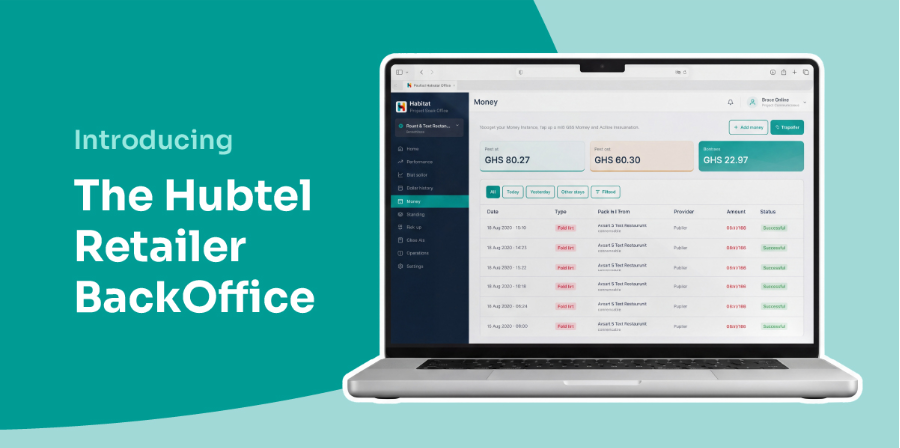
Take Control of Your Business on Hubtel: Introducing the Hubtel Retailer BackOffice
October 30, 2026| 6-minute read
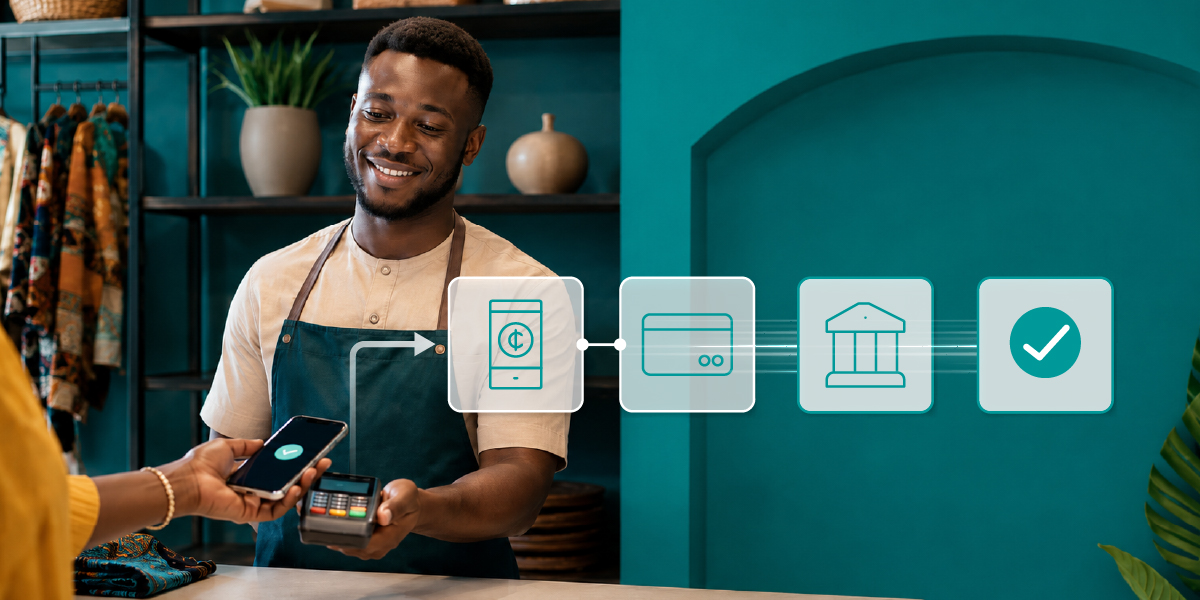
Hubtel Settlement Times Explained: How Fast Your Payments Get to You
September 17, 2026| 8-minute read

Gen Z vs Millennials: What are they ordering?
June 24, 2024| 2-minute read
Introducing Payroll on BackOffice
Payday has an interesting way of becoming more complicated than it needs to be when you’re the one managing payroll.
You’re most likely to face one or two of these: account numbers to collect, details to confirm, new employees to add, and changes to keep track of. And before every payment goes out, everything must be checked again.
Not because payroll itself is complicated, but because there are too many little things to keep track of.
Payroll on Hubtel BackOffice takes care of that. You set up your payroll, your staff join themselves and verify their identity, and they choose where their pay goes. Everyone gets a professional payslip, without all the back and forth.
What you get with Payroll
Payroll saves you a lot of work
Start by setting up your payroll with a name, a pay day and the deductions to be made. Once it is set up, Payroll gives you a code that you can share with your team.
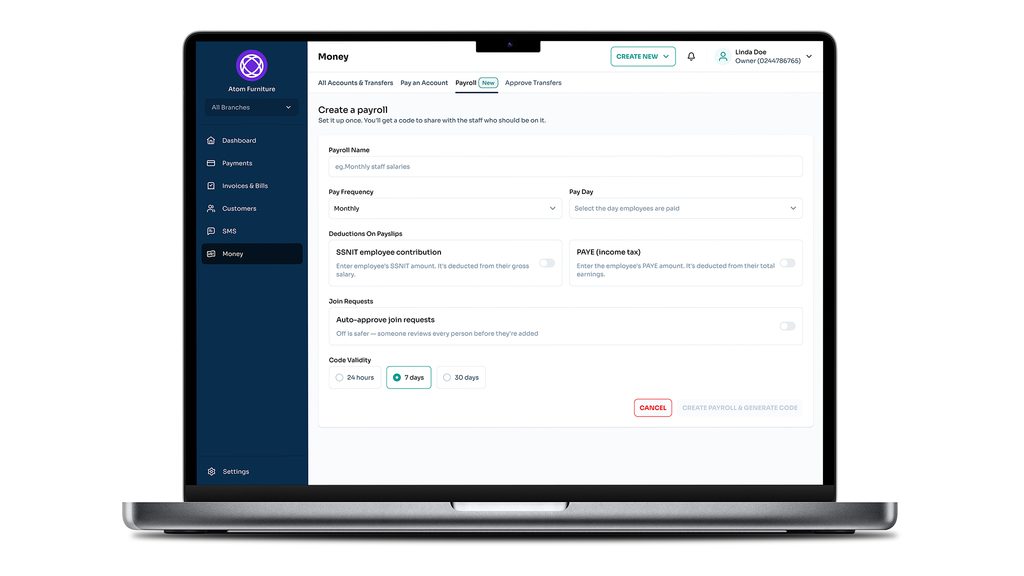
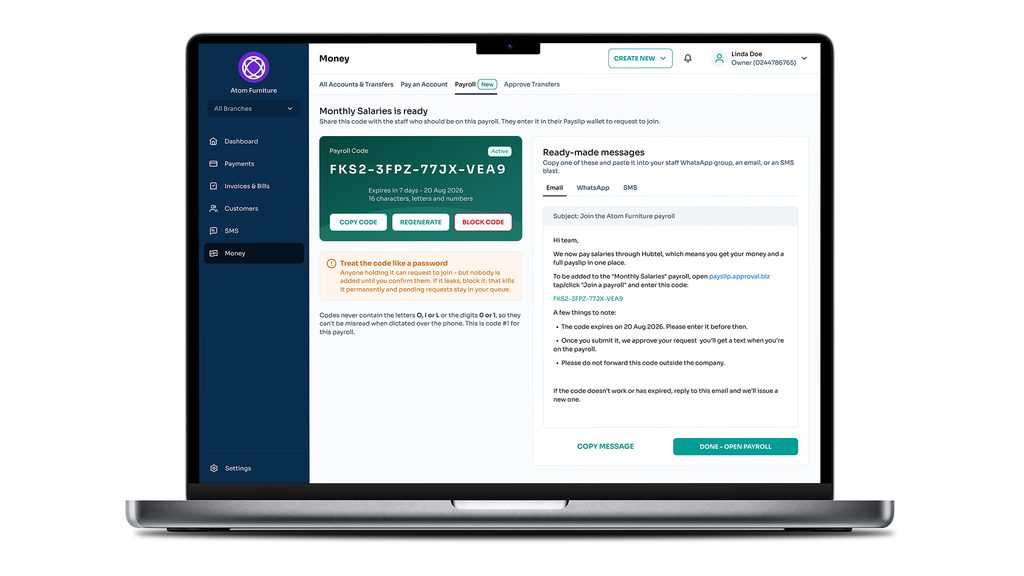
Your staff use the code to join themselves and confirm their own details, including their name, phone number and Ghana Card number, so you do not have to collect and enter this information for everyone. You can also choose to keep “Auto-approve join requests” turned off, so every request comes to you for review, and nobody is added until you confirm them.
Once your team is set up, you can add each person’s salary by uploading one Excel file for the whole team or entering the amounts directly into the table. The salary amounts remain saved, so you do not have to enter them again for the next pay day.
On pay day, send the pay run for approval. Nothing is paid until you, or someone you have given approval rights, approves it. Once approved, the whole team is paid in one run.
No more wrong-account issues
Each staff member proves who they are before they join by providing their Ghana Card number, completing a live face check, and confirming a one-time code sent to their phone.
Their pay then goes into their own wallet. When they are ready to move it, they add their own Mobile Money or bank account, which must be in their own name.
This means you do not have to collect anyone’s account details or chase someone for an updated account number. The person receiving the money is the same person verifying the account the money goes to.
Your staff choose where their pay goes
On pay day, the money arrives in the staff member’s own wallet, where they can see their balance. From there, they can choose whether to move it to a Mobile Money or bank account and decide when to make the transfer.
The transfer happens from their own wallet, so you do not need to collect, enter or update their bank or Mobile Money details.
Your staff get professional payslips
Every staff member gets a payslip for each pay month showing what they earned, what was deducted for PAYE and SSNIT, and what they received. Each deduction comes with a short, plain explanation, so nobody has to ask what was taken off or why.
While the month is still open, the payslip is marked provisional because more payments can still come in. On the first day of the next month, the final payslip is ready for staff to download and share.
More to come on Payroll
Payroll is starting with features that make paying your team simpler, and there’s more being added to make the process even easier. Soon, you will be able to lock a staff member’s pay to a specific bank account, which can be useful when a staff member has a loan tied to that account. You will also be able to make your SSNIT and PAYE statutory payments directly from BackOffice.
Ready to run your first payroll?
Getting your first payroll running takes four steps.
1. Create a payroll. Log in at bo.hubtel.com and open Money. Click New Payroll. Give it a name, a pay day and the deductions you want.
2. Share the code. Copy the code and send it to your staff by SMS, WhatsApp or email.
3. Staff join themselves. Your staff open the link, verify who they are with their Ghana Card and a face check, enter the code, and send a request.
4. Set salaries and pay. Add the salaries, send the pay run for approval. Your team is paid in one run, and each person gets a payslip.
Set up Payroll today on and make payday one less thing to worry about.
Already paying your employees directly to their accounts yourself? You can still do that. The option is now under Pay an Account.
Warning: Constant COLOR_SCHEME_BLUE already defined in /var/www/html/bloghubtel/wp-content/themes/bloghubtel/template-parts/content-mobile-app-banner.php on line 3
Warning: Constant COLOR_SCHEME_RED already defined in /var/www/html/bloghubtel/wp-content/themes/bloghubtel/template-parts/content-mobile-app-banner.php on line 4
Warning: Constant COLOR_SCHEME_LIGHT already defined in /var/www/html/bloghubtel/wp-content/themes/bloghubtel/template-parts/content-mobile-app-banner.php on line 5
Warning: Constant FACEBOOK_SHARE_URL already defined in /var/www/html/bloghubtel/wp-content/themes/bloghubtel/template-parts/content-mobile-app-banner.php on line 8
Warning: Constant LINKEDIN_SHARE_URL already defined in /var/www/html/bloghubtel/wp-content/themes/bloghubtel/template-parts/content-mobile-app-banner.php on line 9
Warning: Constant TWITTER_SHARE_URL already defined in /var/www/html/bloghubtel/wp-content/themes/bloghubtel/template-parts/content-mobile-app-banner.php on line 10
Warning: Constant WHATSAPP_SHARE_URL already defined in /var/www/html/bloghubtel/wp-content/themes/bloghubtel/template-parts/content-mobile-app-banner.php on line 11
Warning: Constant CUSTOM_ADS_CONTENT_WRAPPER already defined in /var/www/html/bloghubtel/wp-content/themes/bloghubtel/template-parts/content-mobile-app-banner.php on line 14
Warning: Constant IMAGE_WRAPPER_CLASSES already defined in /var/www/html/bloghubtel/wp-content/themes/bloghubtel/template-parts/content-mobile-app-banner.php on line 15
Warning: Constant APPLE_APP_STORE_URL already defined in /var/www/html/bloghubtel/wp-content/themes/bloghubtel/template-parts/content-mobile-app-banner.php on line 18
Warning: Constant GOOGLE_PLAY_STORE_URL already defined in /var/www/html/bloghubtel/wp-content/themes/bloghubtel/template-parts/content-mobile-app-banner.php on line 19
Warning: Constant HUAWEI_APP_GALLERY_URL already defined in /var/www/html/bloghubtel/wp-content/themes/bloghubtel/template-parts/content-mobile-app-banner.php on line 20
Related
Clearer Account Names on Your Money Page
April 23, 2026| 2-minute read
Upcoming Changes: Do More in One Place
April 23, 2026| 2-minute read
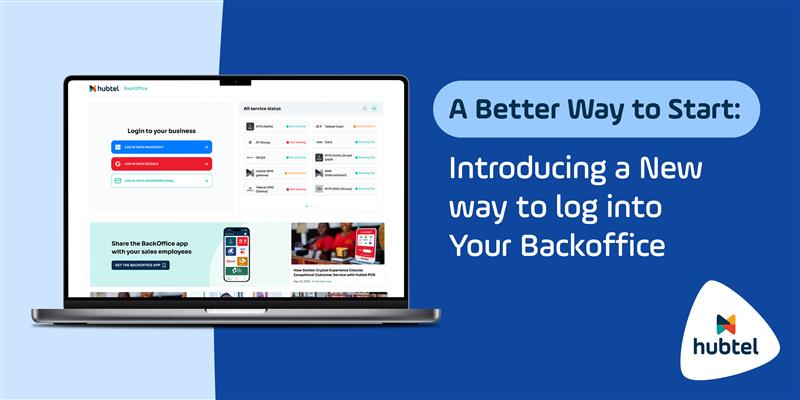
Introducing a New Way to Log Into Your BackOffice
April 10, 2026| 2-minute read
Honouring The Life and Service of Patience Enyonam Akyianu, Hubtel Board Chair
Accra, Ghana – September 24, 2026 – It is with deep sadness that we share the news of the passing of Mrs. Patience Enyonam Akyianu, Chair of Hubtel’s Board.
Mrs. Patience Akyianu joined our Board in 2021 and became Chair last November. Ten months as Chair was far too short a time with such a phenomenal leader.
As Board Chair, the three things she was keen on were clear. Maintain trust. Make everyday payments simpler for customers and merchants. Raise the bar on governance as Hubtel becomes more important for Ghana’s digital economy. And in fact, she never wandered from it. In the months that followed, those three priorities framed how our Board understood its work, and they remain the standard she leaves us with.
She had spent a career earning the right to set that standard. Before Hubtel there was Standard Chartered, where she was Chief Financial Officer for the Africa regional operations in Johannesburg. There was Barclays Bank Ghana, now Absa, where she was Managing Director. There was Ecobank Ghana, where she sat as an Independent Non-Executive Director. And there was Hollard Ghana, where she was Group Chief Executive Officer, and where she is being mourned this week by a company that knew her as well as we did.
Hers was a life spent in rooms where money and trust go hand in hand, and she carried that understanding into ours.
Mrs. Akyianu served on this Board for four years before assuming the Chair. She joined in 2021 during a period of significant structural work and contributed directly to the realignment of the company’s governance architecture. That work included the formalisation of our committee systems, the strengthening of our internal control protocols, the sharpening of our audit and oversight cadence, and the alignment of our governance framework with Bank of Ghana guidelines. She brought to it the discipline of a career carried in finance, risk and regulation, and the improvements made during those years remain embedded in how this company operates today. By the time she was appointed Chair, she knew the business from the inside, and the Board’s decision reflected that.
She treated payment reliability as an obligation to real people rather than a number on a page. For her, the people we serve were as important as the solutions we give.
That was the experience of nearly everyone who worked alongside her, and it is the part of her leadership that no governance framework can record.
Hubtel benefits from leaders who build both systems and people. That was said of Mrs. Akyianu at her appointment last November, and she proved it in every sense. She strengthened how this company governs itself, and she did it in a way that left the people around her better prepared.
The Board has lost its Chair. Hubtel has lost a great leader. Many of us have lost a cherished colleague and friend.
The entire leadership of Hubtel extends our deepest condolences to her husband, Mr. Kwame Akyianu Esquire, to her children, family, and to everyone who was in one way or another connected to Mrs. Akyianu. We are truly grateful for the time she gave us and will uphold the legacy she set at Hubtel.
Rest in perfect peace, Madam Chair.
Warning: Constant COLOR_SCHEME_BLUE already defined in /var/www/html/bloghubtel/wp-content/themes/bloghubtel/template-parts/content-mobile-app-banner.php on line 3
Warning: Constant COLOR_SCHEME_RED already defined in /var/www/html/bloghubtel/wp-content/themes/bloghubtel/template-parts/content-mobile-app-banner.php on line 4
Warning: Constant COLOR_SCHEME_LIGHT already defined in /var/www/html/bloghubtel/wp-content/themes/bloghubtel/template-parts/content-mobile-app-banner.php on line 5
Warning: Constant FACEBOOK_SHARE_URL already defined in /var/www/html/bloghubtel/wp-content/themes/bloghubtel/template-parts/content-mobile-app-banner.php on line 8
Warning: Constant LINKEDIN_SHARE_URL already defined in /var/www/html/bloghubtel/wp-content/themes/bloghubtel/template-parts/content-mobile-app-banner.php on line 9
Warning: Constant TWITTER_SHARE_URL already defined in /var/www/html/bloghubtel/wp-content/themes/bloghubtel/template-parts/content-mobile-app-banner.php on line 10
Warning: Constant WHATSAPP_SHARE_URL already defined in /var/www/html/bloghubtel/wp-content/themes/bloghubtel/template-parts/content-mobile-app-banner.php on line 11
Warning: Constant CUSTOM_ADS_CONTENT_WRAPPER already defined in /var/www/html/bloghubtel/wp-content/themes/bloghubtel/template-parts/content-mobile-app-banner.php on line 14
Warning: Constant IMAGE_WRAPPER_CLASSES already defined in /var/www/html/bloghubtel/wp-content/themes/bloghubtel/template-parts/content-mobile-app-banner.php on line 15
Warning: Constant APPLE_APP_STORE_URL already defined in /var/www/html/bloghubtel/wp-content/themes/bloghubtel/template-parts/content-mobile-app-banner.php on line 18
Warning: Constant GOOGLE_PLAY_STORE_URL already defined in /var/www/html/bloghubtel/wp-content/themes/bloghubtel/template-parts/content-mobile-app-banner.php on line 19
Warning: Constant HUAWEI_APP_GALLERY_URL already defined in /var/www/html/bloghubtel/wp-content/themes/bloghubtel/template-parts/content-mobile-app-banner.php on line 20
Related
Hubtel CEO Alex Bram declares the missing ingredient in Ghana’s debit economy found, as Albrim launches Pay Small Small
November 18, 2026| 6-minute read
Star Assurance HR team visits Hubtel to learn how people grow in a hybrid workplace
November 18, 2026| 4-minute read
Hubtel Mentors Young Fintech Innovators at MoMo Fintech Lab Accra
November 12, 2026| 5-minute read
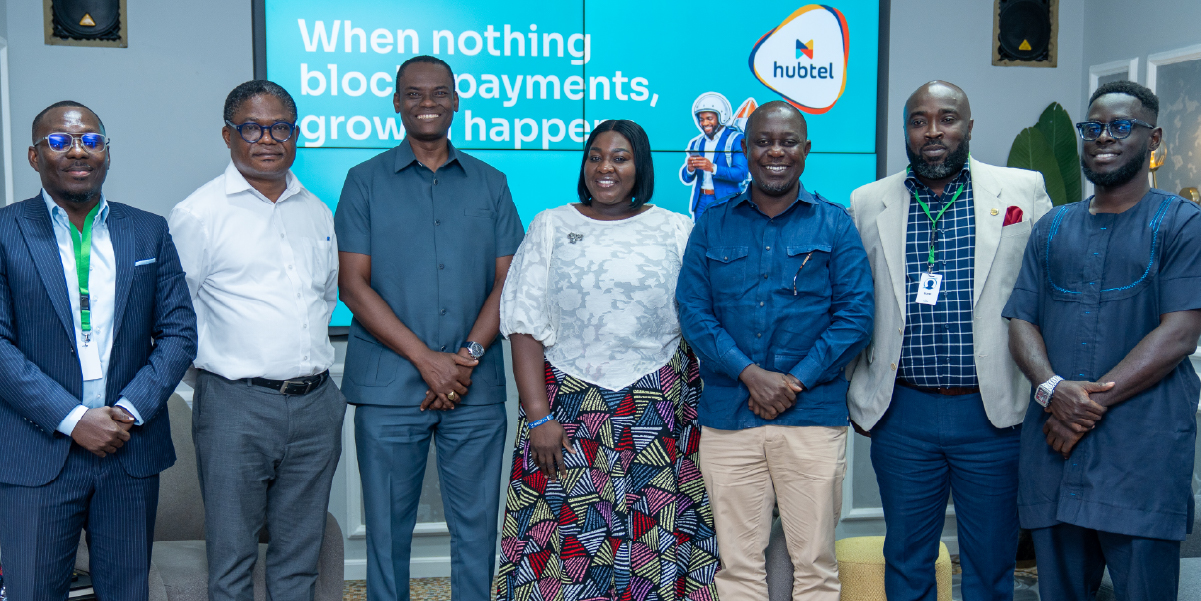
Hubtel and B&FT Discuss New Opportunities for Business Growth
Hubtel welcomed representatives from Business & Financial Times (B&FT) on Thursday, 17 September 2026, for discussions on how both organisations can work together to support business growth, strengthen digital adoption, and create new opportunities for businesses and consumers.
The B&FT delegation was led by its Chief Executive Officer, Dr Godwin Acquaye, and included Stephen Dotse, Business Development Manager, Charles Ekow Atkings, Event Manager, and Meimuna Diakite, Human Resources Manager. Hubtel was represented by Jonathan Ansah, Chief Finance Officer, Ernest Apenteng, General Manager, and Nana Owusu-Marfo, Head of Brand and User Experience.
The meeting focused on opportunities for collaboration across media, business engagement, thought leadership, digital innovation, and other areas of mutual interest.

Moving beyond visibility
The conversation also focused on how a potential partnership could support Hubtel’s broader business objectives, particularly in reaching the right audiences, creating opportunities for engagement, and driving greater awareness and adoption of digital solutions.
We shared that any potential collaboration should have clear objectives and measurable results. This could include reaching specific business audiences, supporting customer acquisition, encouraging digital adoption, or improving awareness of solutions that can help businesses operate more efficiently.
READ ALSO: https://news.hubtel.com/hubtel-pk-amoabeng-foundation-youth-leadership-partnership/
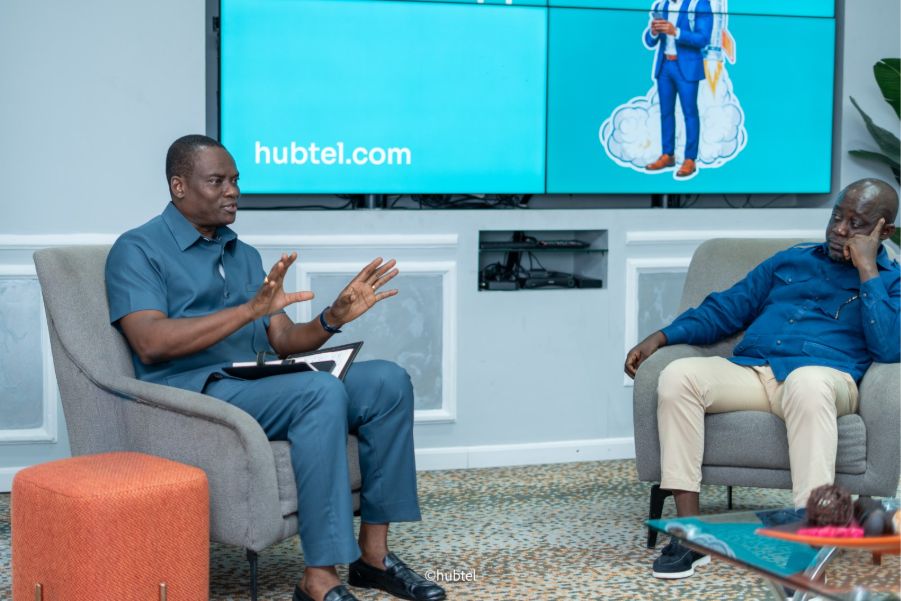
The discussion also highlighted the importance of choosing platforms and opportunities based on the audiences they reach and the outcomes they can deliver.
Connecting with the business community
B&FT shared perspectives on its work across media, business events, industry engagement, and platforms that bring together business leaders, professionals, entrepreneurs, and other stakeholders.

The teams explored how these audiences could create opportunities for Hubtel to engage with businesses and professionals, particularly around technology, digital payments, and solutions that support business growth.
There was also interest in creating more direct ways for businesses and customers to engage with digital solutions, while keeping the focus on practical value and meaningful business outcomes.
READ ALSO: https://news.hubtel.com/hubtel-official-technology-partner-momo-fintech-lab/
Creating opportunities for digital adoption
The conversation also touched on how technology can help businesses operate more easily and serve their customers better.
We shared how our work has expanded from SMS and content services into digital payments and technology solutions that support businesses across different sectors.

Both teams discussed opportunities to encourage greater adoption of digital solutions among businesses and to create more awareness around the tools available to help them grow and serve their customers.
The discussions also considered how business-focused platforms and engagements could help introduce entrepreneurs and SMEs to relevant technology and payment solutions.
Exploring opportunities for collaboration
The meeting also covered opportunities for Hubtel to engage with B&FT’s wider media and business ecosystem, including its various platforms and industry-focused initiatives.
Rather than focusing on a single channel or activity, the conversation looked at how both organisations could bring their respective strengths together to create useful opportunities for businesses, share practical insights, and contribute to conversations around technology and business growth.
Potential areas of collaboration included business and industry conversations, thought leadership, digital innovation, entrepreneurship, and financial inclusion.
The teams also discussed opportunities across B&FT’s media and digital platforms that could support these conversations and provide space for Hubtel’s leadership and teams to share practical perspectives.

The engagement forms part of ongoing discussions between Hubtel and B&FT, with both organisations exploring areas where their respective platforms, expertise, and audiences can create value for the wider business community.
Warning: Constant COLOR_SCHEME_BLUE already defined in /var/www/html/bloghubtel/wp-content/themes/bloghubtel/template-parts/content-mobile-app-banner.php on line 3
Warning: Constant COLOR_SCHEME_RED already defined in /var/www/html/bloghubtel/wp-content/themes/bloghubtel/template-parts/content-mobile-app-banner.php on line 4
Warning: Constant COLOR_SCHEME_LIGHT already defined in /var/www/html/bloghubtel/wp-content/themes/bloghubtel/template-parts/content-mobile-app-banner.php on line 5
Warning: Constant FACEBOOK_SHARE_URL already defined in /var/www/html/bloghubtel/wp-content/themes/bloghubtel/template-parts/content-mobile-app-banner.php on line 8
Warning: Constant LINKEDIN_SHARE_URL already defined in /var/www/html/bloghubtel/wp-content/themes/bloghubtel/template-parts/content-mobile-app-banner.php on line 9
Warning: Constant TWITTER_SHARE_URL already defined in /var/www/html/bloghubtel/wp-content/themes/bloghubtel/template-parts/content-mobile-app-banner.php on line 10
Warning: Constant WHATSAPP_SHARE_URL already defined in /var/www/html/bloghubtel/wp-content/themes/bloghubtel/template-parts/content-mobile-app-banner.php on line 11
Warning: Constant CUSTOM_ADS_CONTENT_WRAPPER already defined in /var/www/html/bloghubtel/wp-content/themes/bloghubtel/template-parts/content-mobile-app-banner.php on line 14
Warning: Constant IMAGE_WRAPPER_CLASSES already defined in /var/www/html/bloghubtel/wp-content/themes/bloghubtel/template-parts/content-mobile-app-banner.php on line 15
Warning: Constant APPLE_APP_STORE_URL already defined in /var/www/html/bloghubtel/wp-content/themes/bloghubtel/template-parts/content-mobile-app-banner.php on line 18
Warning: Constant GOOGLE_PLAY_STORE_URL already defined in /var/www/html/bloghubtel/wp-content/themes/bloghubtel/template-parts/content-mobile-app-banner.php on line 19
Warning: Constant HUAWEI_APP_GALLERY_URL already defined in /var/www/html/bloghubtel/wp-content/themes/bloghubtel/template-parts/content-mobile-app-banner.php on line 20
Related
Hubtel CEO Alex Bram declares the missing ingredient in Ghana’s debit economy found, as Albrim launches Pay Small Small
November 18, 2026| 6-minute read
Star Assurance HR team visits Hubtel to learn how people grow in a hybrid workplace
November 18, 2026| 4-minute read
Hubtel Mentors Young Fintech Innovators at MoMo Fintech Lab Accra
November 12, 2026| 5-minute read
Hubtel Settlement Times Explained: How Fast Your Payments Get to You
Hubtel settlement times are straightforward once you know what’s happening behind the scenes. Settlement is what happens the moment a customer pays a Hubtel merchant: the money moves into that merchant’s own Hubtel account.
The customer is debited instantly, and you see that reflected on your dashboard right away. However, the movement of that payment to your Hubtel merchant account happens within the hour. Not a day or two, your money is made available to you every hour after taking payments.
Once the money has settled into your Hubtel account, you have full control of it. Whether it’s moving it to your own bank account or Mobile Money wallet, paying suppliers or employees, or simply leaving it there until you need it.
What Settlement Actually Means
Settlement is simply the step where a customer’s payment becomes yours. That means the money received from your customers, credited to your Hubtel account. In the process of settlement, two different things happen at two different speeds:
- The debit is instant: The moment a customer pays, whether by Mobile Money, card, or bank transfer, their payment is confirmed and you’ll see it reflected on your dashboard right away.
- The settlement is hourly: Your Hubtel account balance is credited on an hourly basis. So even though the debit shows up straight away, the money isn’t actually in your balance yet, until that hourly settlement runs.
To cite an instance, a customer buys GHS 200 of goods from your shop and pays you by Mobile Money. The moment they pay, a confirmation shows on your dashboard, that’s the debit, telling you the payment went through. By the next hour, that GHS 200 is credited to your Hubtel account balance, readily accessible to you.
Hence, a debit notification is not the same as a balance credit. These two are easy to confuse, since they can look identical from the merchant’s side, but they’re different moments. Debit notification is instant while Settlement is hourly.
Why Settling Fast Actually Matters
Many payment platforms only give merchants one moment of “getting paid”: the batch settlement, usually done days after the sale. With Hubtel’s hourly settlement;
- You know a sale went through the moment it happens, not days later.
- Your money is usable almost immediately, rather than tied up until a distant batch date.
- Reconciliation is simpler, because payments land in your account continuously rather than arriving in one delayed batch you have to match up later.
- Settlement doesn’t stop for weekends or public holidays. It runs every hour, every day, so a sale on a Saturday or a public holiday settle the same way a weekday sale does.
Ready to put this to work? Sign up as a Hubtel merchant at business.hubtel.com. It takes a few minutes and you’ll be set up to collect Mobile Money, card, bank payments and GHQR.
A Quick Note on Two Other Terms You’ll See
Your Hubtel account distinguishes different types of money movement, and it’s worth knowing them so nothing on your dashboard is confusing.
- Payout is when you pay money out of your Hubtel account to someone else, a supplier or an employee, into their Mobile Money number or bank account.
- Sweep is when you move money from your Hubtel account into your own bank account or Mobile Money wallet.
Both are things you choose to do, on your own schedule, once settlement has already put the money in your Hubtel account. Neither holds up settlement, and they both move quickly. Recent data across 124,163 sweeps over a 46-day period showed money reaching the destination account in about 33 seconds on average, with 94% settling in under a minute.
How Hubtel Settlement Times Compare to Other Ghana Payment Gateways
It helps to see this next to what other payment gateways in Ghana do, specifically, how long it takes before your money is genuinely available to you.
Major payment platforms push merchant funds to your bank account on a fixed next-business-day (T+1) basis, so your money isn’t fully available to you until that automatic transfer lands, up to a full business day after the sale. Hubtel settles into your account within an hour. This means your money is made available to you about 96% faster than a full 24-hour wait most payment gateways do.
Start Getting Paid This Way
Settlement doesn’t have to be a long wait, and on Hubtel it isn’t one. The moment a customer pays you, that money is already yours, sitting in your Hubtel account within the hour at the latest.
That clarity is the point. You always know exactly where your money is and what stage it’s at, instead of guessing whether a payment has “gone through” somewhere out of sight.
Because settlement puts the money in your hands fast, you’re in control of what happens next, whether that’s a payout, a sweep, or just letting it sit, rather than working around someone else’s schedule.
That kind of control adds up to something bigger than convenience. It is room to grow. Money that’s usable within the hour is money you can put straight back into your business, restocking, paying staff, settling a supplier, on the same day it comes in, rather than a day or more later.
If cash flow is something you think about daily rather than monthly, that’s the practical benefit worth remembering. You’re never waiting a full business day to find out if you got paid.
If you run a business in Ghana and want your money working for you the moment a customer pays, sign up as a Hubtel merchant at business.hubtel.com. It takes a few minutes to get started, and you’ll be set up to collect Mobile Money, card, bank payments and GHQR.
Frequently Asked Questions
How long does it take for a payment to settle on Hubtel? Settlement happens within the hour. The moment a customer pays, the debit is confirmed instantly and shows on your dashboard right away, but your Hubtel account balance itself is credited on the hour, every hour, so the money is fully settled and ready to use within an hour of the sale at most.
Why does the payment show on my dashboard before my balance updates? What you’re seeing instantly is the debit, confirmation that the customer’s payment went through. That’s not the same moment as settlement. Your Hubtel account balance is credited separately, on the hour, every hour, so there can be up to an hour between seeing the payment notification and the money actually being in your usable balance.
What’s the difference between settlement, payout, and sweep? Settlement is when a customer’s payment lands in your Hubtel account. Payout is when you send money from your Hubtel account to someone else, like a supplier or employee. Sweep is when you move money from your Hubtel account into your own bank account or Mobile Money wallet. Settlement happens first and fast; payout and sweep are things you choose to do afterwards, on your own schedule.
Can I pay suppliers or staff directly from my Hubtel account? Yes, that’s called a payout. Once a payment has settled into your Hubtel account, you can pay it out directly to a supplier’s or employee’s Mobile Money number or bank account, without first sweeping it to your own account.
Why does my money show as “settled” in Hubtel before it’s in my bank account? Because settlement and a sweep to your own bank are two different steps. Settlement, money landing in your Hubtel account, happens fast, by design. Sweeping that money on to your own bank account is a separate step you trigger afterwards.
Does Hubtel settle payments on weekends or public holidays? Yes. Settlement happens on weekends and public holidays too, not just business days — this applies across all regions of Ghana, including times when banks are closed. A sale made over the weekend still settles into your Hubtel account within the hour, rather than waiting until Monday.
Can I choose when my money moves to my bank or Mobile Money wallet? Yes. Once your money has settled, you can sweep it to your own bank account or Mobile Money wallet whenever you like using the Transfer Money button on your dashboard, or automate transfers on a schedule you set in the Money section of your Hubtel BackOffice. Bank transfers have a minimum of GHS 500, while Mobile Money transfers can be any amount.
Warning: Constant COLOR_SCHEME_BLUE already defined in /var/www/html/bloghubtel/wp-content/themes/bloghubtel/template-parts/content-mobile-app-banner.php on line 3
Warning: Constant COLOR_SCHEME_RED already defined in /var/www/html/bloghubtel/wp-content/themes/bloghubtel/template-parts/content-mobile-app-banner.php on line 4
Warning: Constant COLOR_SCHEME_LIGHT already defined in /var/www/html/bloghubtel/wp-content/themes/bloghubtel/template-parts/content-mobile-app-banner.php on line 5
Warning: Constant FACEBOOK_SHARE_URL already defined in /var/www/html/bloghubtel/wp-content/themes/bloghubtel/template-parts/content-mobile-app-banner.php on line 8
Warning: Constant LINKEDIN_SHARE_URL already defined in /var/www/html/bloghubtel/wp-content/themes/bloghubtel/template-parts/content-mobile-app-banner.php on line 9
Warning: Constant TWITTER_SHARE_URL already defined in /var/www/html/bloghubtel/wp-content/themes/bloghubtel/template-parts/content-mobile-app-banner.php on line 10
Warning: Constant WHATSAPP_SHARE_URL already defined in /var/www/html/bloghubtel/wp-content/themes/bloghubtel/template-parts/content-mobile-app-banner.php on line 11
Warning: Constant CUSTOM_ADS_CONTENT_WRAPPER already defined in /var/www/html/bloghubtel/wp-content/themes/bloghubtel/template-parts/content-mobile-app-banner.php on line 14
Warning: Constant IMAGE_WRAPPER_CLASSES already defined in /var/www/html/bloghubtel/wp-content/themes/bloghubtel/template-parts/content-mobile-app-banner.php on line 15
Warning: Constant APPLE_APP_STORE_URL already defined in /var/www/html/bloghubtel/wp-content/themes/bloghubtel/template-parts/content-mobile-app-banner.php on line 18
Warning: Constant GOOGLE_PLAY_STORE_URL already defined in /var/www/html/bloghubtel/wp-content/themes/bloghubtel/template-parts/content-mobile-app-banner.php on line 19
Warning: Constant HUAWEI_APP_GALLERY_URL already defined in /var/www/html/bloghubtel/wp-content/themes/bloghubtel/template-parts/content-mobile-app-banner.php on line 20
Related
Take Control of Your Business on Hubtel: Introducing the Hubtel Retailer BackOffice
October 30, 2026| 6-minute read
Hubtel Developer Guide: Adding Mobile Money Checkout to Any Website
October 14, 2026| 36-minute read
Gen Z vs Millennials: What are they ordering?
June 24, 2024| 2-minute read
